
There are certain pasta dishes I rely on when I want big flavor with minimal effort, and this is one of them. It’s bold, salty, slightly spicy, and comforting all at once.
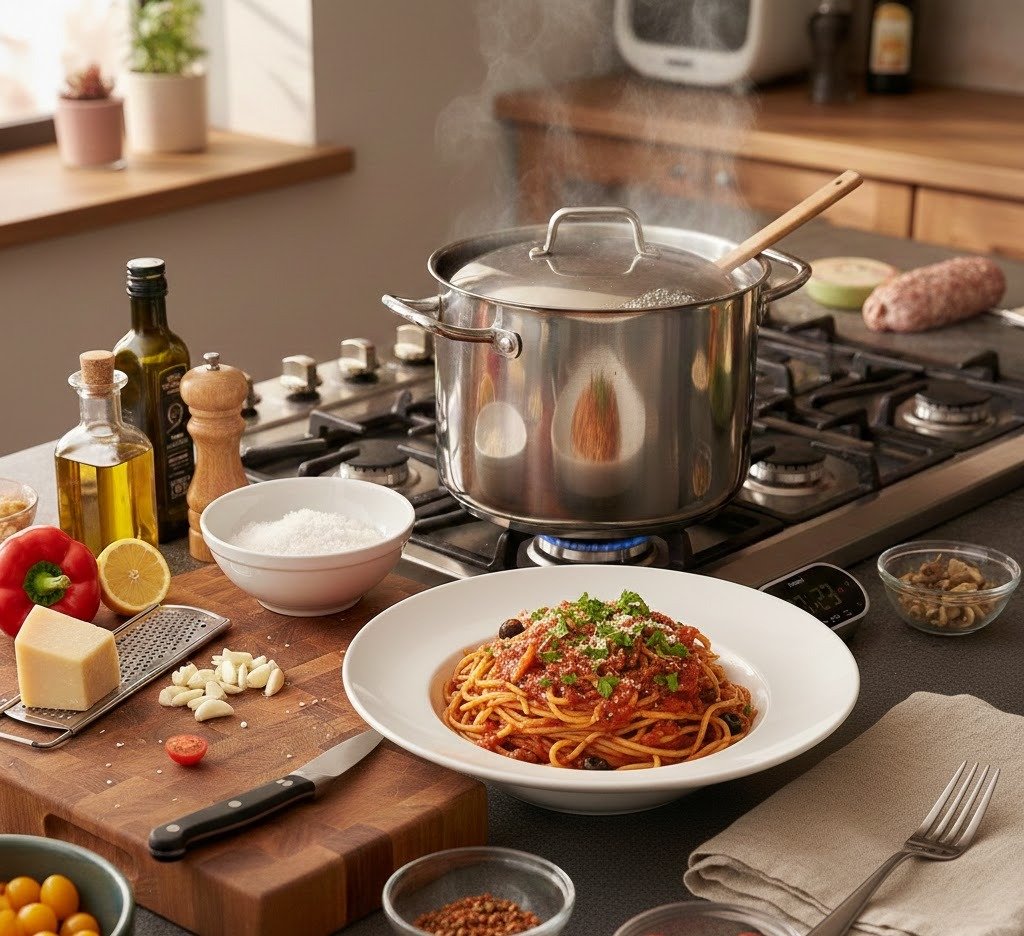
Hi, my name is Dipedra Kumar. I like cooking food for my family and relatives. I make my own type recipe. My friends call me a pro chef.
The beauty of this recipe lies in how a handful of simple ingredients come together to create something that tastes far more complex than it actually is.
Recipe Overview
- Course: Main dish
- Cuisine: Italian
- Prep Time: 10 minutes
- Cook Time: 20 minutes
- Total Time: 30 minutes
- Servings: 4
- Difficulty: Easy
What Is Spaghetti Puttanesca?
This dish is a Southern Italian pasta made with a fast-cooked tomato sauce flavored with garlic, olive oil, olives, capers, anchovies, and chili.
The sauce is intense but balanced, clinging to the pasta instead of drowning it. It’s not delicate food, and that’s exactly what makes it so good.
What Does Puttanesca Mean?
The name comes from Italian slang and roughly translates to “in the style of a prostitute.” It sounds shocking,
but it reflects the dish’s roots as something quick, practical, and made with whatever was available. The name has stuck, even as the dish became a classic.
Origins of Spaghetti alla Puttanesca
Most food historians trace this pasta back to Naples or the surrounding Campania region in the mid-20th century.
Stories vary, but they all point to the same idea: a late-night meal built from pantry staples.
Whether cooked at home or in small restaurants, it was meant to be fast, filling, and flavorful.
Why You’ll Love This Recipe
I keep coming back to this dish because it never fails me. It’s quick enough for weeknights, flexible enough for substitutions, and bold enough that it never feels boring.
Even when I’m tired or short on time, it still feels like a proper meal.
Authentic Italian Approach
Traditional versions keep things very simple. There’s no cream, no butter, and no long simmering.
The sauce cooks just long enough for the flavors to meld while staying bright and punchy. Each ingredient plays a clear role without being overworked.
Classic vs Modern Versions
Classic preparations rely on anchovies, olives, capers, and dried herbs. More modern takes may include onions, fresh herbs, or skip anchovies altogether.
I’ve tried many variations, but I always come back to the simpler approach. It just tastes more grounded and honest.
Ingredients You’ll Need
This dish relies on strong, salty components, so quality matters. Since the ingredient list is short, each one really shows up in the final result.
| Amount | Ingredient | Notes |
|---|---|---|
| 12 oz | Spaghetti | Or any long pasta |
| 3 tbsp | Extra-virgin olive oil | Good quality |
| 4 cloves | Garlic | Thinly sliced or chopped |
| 4 fillets | Anchovies | Oil-packed |
| ½ tsp | Red pepper flakes | Adjust to taste |
| 1 can (28 oz) | Tomatoes | Crushed or whole |
| ⅓ cup | Black olives | Kalamata or Gaeta |
| 2 tbsp | Capers | Drained |
| As needed | Salt | Use sparingly |
| Optional | Black pepper | To taste |
| ¼ cup | Fresh parsley | Chopped |
Pantry Staples That Make This Work
Most of these ingredients live in my kitchen all the time. That’s why this recipe feels like a backup plan when I haven’t shopped or planned.
Choosing the Right Olives
I usually reach for black olives with a deep, briny flavor. Kalamata and Gaeta olives both hold up well in the sauce and don’t turn mushy.
About the Anchovies
Anchovies don’t make the sauce taste fishy. They melt into the oil and add a savory backbone you’d miss if they weren’t there.
Most people who claim they hate anchovies don’t even notice them once the dish is finished.
Making It Without Anchovies
You can leave them out if needed. The sauce will still be good, just a bit less rich.
When I skip them, I usually add an extra drizzle of olive oil and a few more capers.
Equipment Needed
Nothing fancy here. This is a straightforward, one-pan sauce with a pot for pasta.
| Amount | Equipment | Notes |
|---|---|---|
| 1 | Large pot | For boiling pasta |
| 1 | Wide skillet | For sauce |
| 1 | Wooden spoon | For stirring |
| 1 | Colander | For draining |
| 1 | Knife | Prep work |
| 1 | Cutting board | Chopping |
How to Make It
This dish moves quickly once cooking starts, so I like having everything prepped before turning on the stove.
Step 1: Prep Everything
I chop the garlic, olives, parsley, and anchovies first. I also drain the capers and open the tomatoes so there’s no scrambling later.
Step 2: Build the Sauce
I heat the olive oil gently and add garlic and chili flakes, letting them infuse the oil without browning.
The anchovies go in next and dissolve almost immediately. Tomatoes are added and simmered briefly.
Step 3: Cook the Pasta
While the sauce simmers, I cook the pasta in well-salted water until just tender. I always reserve some pasta water before draining.
Step 4: Bring It Together
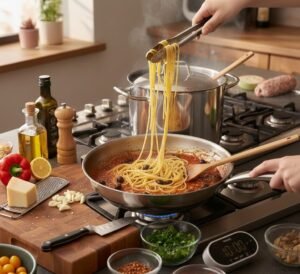
The pasta goes straight into the sauce with a splash of the reserved water. I toss everything until the sauce coats the noodles evenly.
Tips for Best Results
I keep the heat moderate and taste as I go. Since olives, capers, and anchovies are already salty, I wait until the end before adding any extra salt.
Common Mistakes to Avoid
Letting the garlic burn will ruin the sauce. Overcooking the tomatoes will dull the flavor. Another mistake is oversalting too early instead of adjusting at the end.
Variations to Try
Vegetarian Version
Simply leave out the anchovies and slightly increase the olives and capers.
Vegan Version
The vegetarian version already works perfectly for a plant-based meal.
Extra-Spicy Version
Add more chili flakes or fresh chili slices if you like real heat.
Tuna Addition
Stir in oil-packed tuna near the end for a heartier, protein-rich option.
Best Pasta Shapes for This Sauce
Long pasta works best because it grabs onto the sauce. Spaghetti is classic, but linguine or bucatini are great too.
What to Serve Alongside
I usually pair this with a simple salad or some crusty bread. Anything more feels unnecessary since the pasta already has such strong flavors.
Is This a Healthy Choice?
I think of it as balanced comfort food. It uses olive oil instead of butter, relies on tomatoes for body, and doesn’t need heavy additions to feel satisfying.
Nutrition Highlights
- Moderate calorie count per serving
- Healthy fats from olive oil
- Rich in antioxidants from tomatoes
- Naturally dairy-free
- High flavor without heavy ingredients
Storing and Reheating
Leftovers keep well for a couple of days in the fridge. I reheat gently on the stovetop with a splash of water to loosen the sauce.
Freezing the Sauce
The sauce freezes very well on its own. I prefer freezing it without pasta and cooking fresh noodles later.
Easy Weeknight Option
This is one of my most dependable dinners when time is short. From start to finish, it’s ready in about half an hour and never feels like a compromise.
Traditional Neapolitan Style
The Neapolitan approach is bold and unfussy. Strong flavors, minimal ingredients, and no unnecessary extras. It’s food that knows exactly what it wants to be.
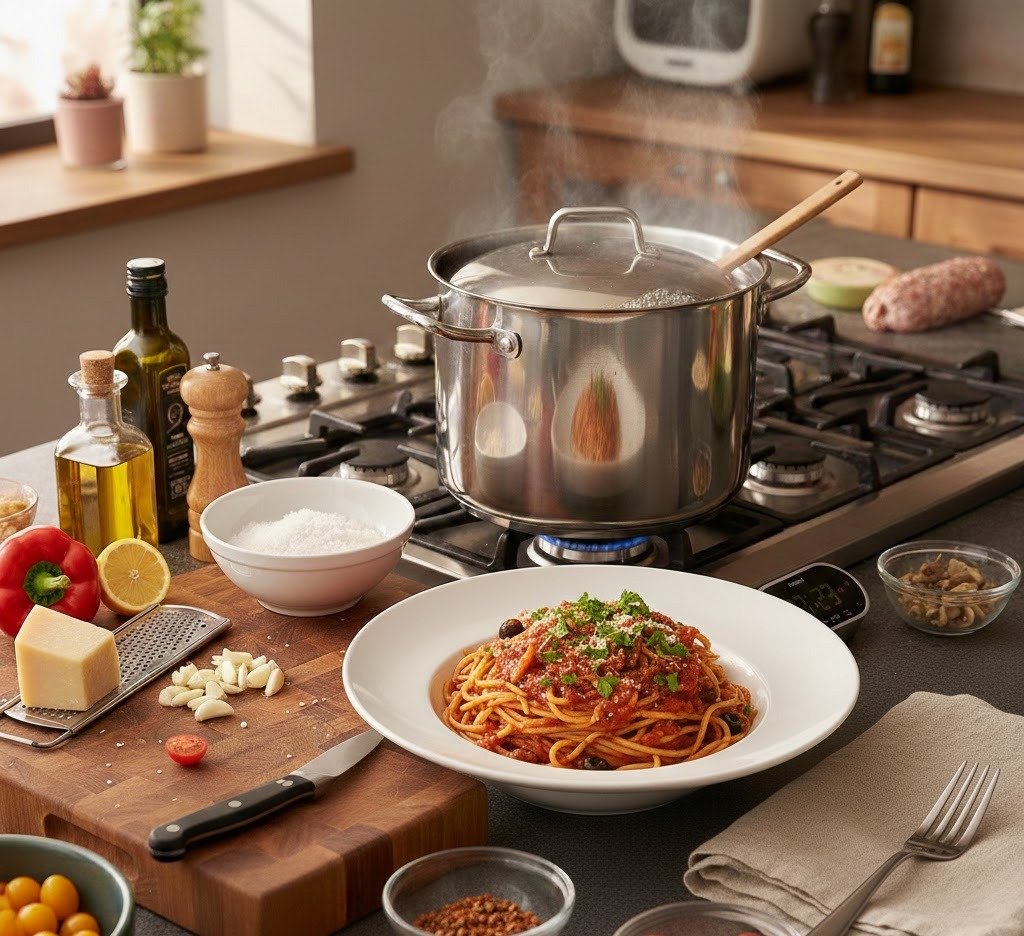
Spaghetti Puttanesca Recipe
Ingredients
Equipment
Method
- Bring a large pot of well-salted water to a boil for the pasta. While the water heats, prep all ingredients so everything is ready to go.
- Heat the olive oil in a wide skillet over medium-low heat. Add the garlic and red pepper flakes and cook gently until fragrant, making sure the garlic doesn’t brown.
- Add the anchovy fillets to the skillet and stir until they dissolve into the oil, about 1 minute. This creates a rich, savory base.
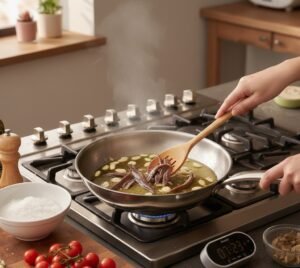
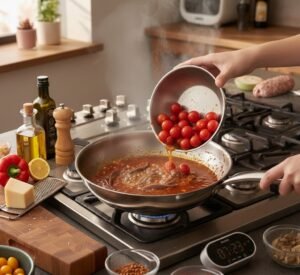
- Pour in the tomatoes and bring the sauce to a gentle simmer. Let it cook for 8–10 minutes, stirring occasionally, until slightly thickened.
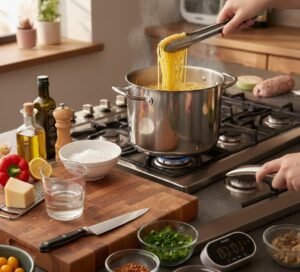
- Meanwhile, cook the spaghetti in boiling water until just al dente. Reserve about ½ cup of the pasta cooking water, then drain.
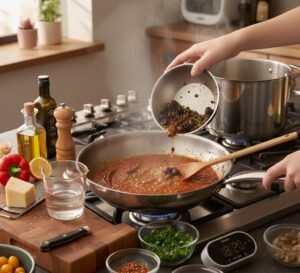
- Add the olives and capers to the sauce and stir well. Taste and adjust seasoning carefully with salt and black pepper if needed.
- Add the drained pasta directly to the sauce along with a splash of reserved pasta water. Toss until the sauce coats the pasta evenly.
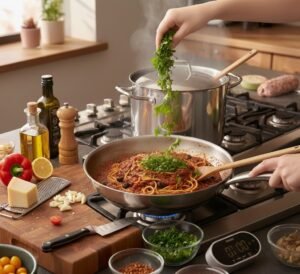
- Turn off the heat and stir in the chopped parsley. Serve immediately while hot.
Notes
- I don’t add cheese traditionally, but sometimes I sneak in a little pecorino anyway.
- If skipping anchovies, add a bit more olive oil and capers for balance.
- The sauce can be made ahead and reheated gently before tossing with pasta.
FAQs:-
Can I make this pasta without anchovies?
Yes, you can skip them if needed. The sauce will still taste good, but it won’t have the same depth. I usually add a little extra olive oil and capers to balance it out.
What kind of olives work best?
Black olives with a bold, briny flavor work best. Kalamata and Gaeta olives are my top choices because they hold their texture and flavor in the sauce.
How spicy is this dish?
It’s mildly spicy, not hot. The chili flakes add warmth rather than heat, and you can easily adjust the amount to suit your taste.
Can I make the sauce ahead of time?
Yes. The sauce can be made a day or two in advance and reheated gently on the stove before tossing with fresh pasta.
Is cheese traditionally added on top?
No, it’s usually served without cheese. That said, if you like a little grated cheese, there’s no rule stopping you.
Final Thoughts
I’ve made this pasta more times than I can count, and it still feels exciting every time. It’s quick, flavorful, and endlessly adaptable. If you like dishes that deliver a lot with very little effort, this one deserves a permanent spot in your rotation.
Read More:- Gibbons Fine Grill Recipe




