
Welcome, today I’m cooking something that always brings me back to my mom’s kitchen: a warm, savory Stir Fry Chinese Cauliflower Recipe that feels simple, homely, and surprisingly comforting.
Every time I make it, the steam, the garlic, the glossy sauce… it all reminds me how vegetables can taste so, so good when treated with love.
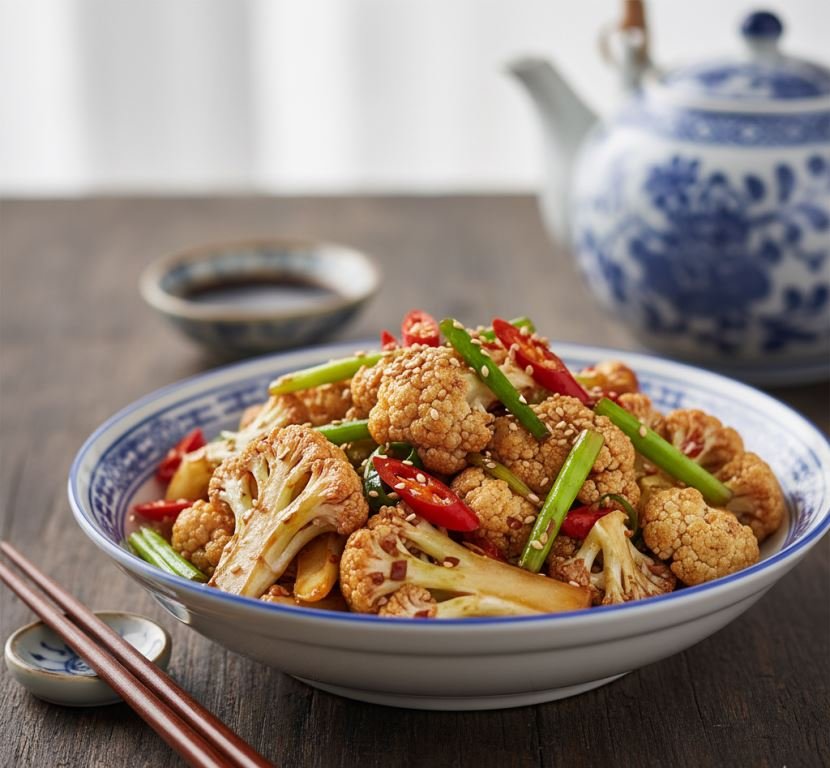
Before I start chatting too much, here’s your quick little recipe overview because I know we bloggers like giving that right up top.
Now let me take you into the heart of this stir fry, the way I usually do — softly, slowly, and like we’re cooking together at the stove.
Understanding Chinese Cauliflower
Chinese cauliflower is a little different from the big, fluffy white cauliflowers you usually see.
It has longer stems, smaller florets, and this stubborn crunch that stays even after cooking.
When I can find it, I always grab it because it’s perfect for stir-frying. It won’t fall apart, and it absorbs sauces in such a beautiful way.
But honestly, most days I just end up using regular cauliflower, and that works totally fine.
You just cook it a tiny bit less because it softens faster. The flavor still comes through like magic once the aromatics hit the pan.
What I love most about this recipe is how flexible it is. Sometimes I keep it mild and Cantonese-style, all glossy and savory with that little sesame oil finish.
Other days, I go bold with Sichuan flavors — doubanjiang, dried chilies, Sichuan peppercorn — and suddenly it feels like something from a tiny restaurant tucked away on a busy street in China.
But for this article, I lean toward the gentle version, the one I grew up eating. It’s simple but in that quiet way that feels comforting after a long day.
The Ingredients You’ll Need
I keep these pretty basic, but each one has a job: the shallots create sweetness, the celery adds aromatic crunch, and the sauce ties everything together so the cauliflower becomes the main character.
| Ingredient | Amount | Notes |
|---|---|---|
| Cauliflower (Chinese or regular) | ~1 lb | Cut into florets |
| Chinese celery or regular celery | 3–4 stalks | Sliced into 2-inch pieces |
| Shallot or onion | 1 | Adds sweetness |
| Red pepper | 1 small | Optional for color |
| Neutral oil | 1 tbsp | For stir-frying |
| Salt | 1 tsp + pinch | For soaking + seasoning |
| Soy sauce | 1 tbsp | Savory base |
| Oyster sauce | 1/2 tbsp | Or vegetarian oyster sauce |
| Sugar | 1/4 tsp | Balances |
| Bouillon powder | 1/4 tsp | Optional for extra flavor |
| Water | 1/2 cup | Helps thicken sauce |
| Cornstarch | 1–2 tsp | Depends on thickness you like |
| Sesame oil | 1/4 tsp | Finishing touch |
Equipment
• Wok or large pan
• Pot for blanching
• Strainer
• Mixing bowl
• Knife + chopping board
• Spoon or whisk for mixing the sauce
The Heart of the Recipe
I always start by giving my cauliflower a little spa bath. I drop the florets into salted water and let them sit while I slice the shallots and celery.
The salt helps loosen up any dirt, and honestly, it makes me feel better knowing everything is super clean. Some people skip this step, but my mom always did it, so now I do too.
Blanching is my next trick. Cauliflower can be stubborn — either too hard or too soft — but blanching gives it a head start so you don’t overcook it during the stir fry.
I toss it into boiling salted water for 2–3 minutes until it looks brighter and slightly tender but still snappy when you bite. A quick rinse under cool water stops the cooking.
While the cauliflower drains, I mix the sauce. It’s a simple one, but that simplicity is the charm.
Soy sauce for saltiness, oyster sauce for umami, sugar to soften the edges, bouillon powder for depth, and water mixed with cornstarch, so when it hits the hot pan, it turns glossy and thick.
I whisk until the cornstarch disappears — it settles fast, so I always stir again before pouring it in later.
How to Make Stir-Fry Chinese Cauliflower

Step 1
I heat my wok on medium-high because the flavor of a stir fry comes from that quick, hot contact. Once the oil warms up, I toss in the shallots and the celery.
The smell hits you quickly — that mix of sweetness and green freshness. I cook them for about a minute or two until they soften slightly.
Step 2
Here’s where the blanched cauliflower joins the party. I toss it into the pan along with a pinch of salt and give everything a quick, lively stir.
This part always feels fun — the colors, the sizzle, the little bits of shallot clinging to the florets.
Step 3
After a couple of minutes of stir-frying, I whisk the sauce again so the cornstarch lifts from the bottom.
Then I pour it in and watch it bubble around the vegetables. It thickens fast, turning shiny and coating everything like a soft blanket.
Step 4
If I’m using red pepper, I toss it in now so it keeps a bright crunch. Then I taste a floret. Sometimes I want a little more soy sauce.
Other times, I want the tiniest splash more water if it gets too thick. Once it tastes right to me, I finish with a drizzle of sesame oil — just enough to smell it.
Step 5
I always let it rest for one tiny minute with the heat off. That last minute is important — the sauce calms down, the cauliflower finishes absorbing flavor, and everything just settles beautifully.
Stir Fry Chinese Cauliflower
Ingredients
Equipment
Method
- Cut the cauliflower into even florets. Prepare a large bowl of water and add 1 teaspoon of salt. Soak the florets while prepping the other ingredients.
- Slice the shallot, celery, and red pepper if using. Then mix all sauce ingredients in a bowl, making sure the cornstarch dissolves completely.
- Bring a pot of water to a boil. Blanch the cauliflower for 2–3 minutes until about 75% cooked. Drain and rinse lightly under cool water to stop cooking.
- Heat the wok on medium-high. Add neutral oil, then stir fry the shallots and celery for 1–2 minutes until fragrant.
- Add the blanched cauliflower with a pinch of salt. Stir fry 2–3 minutes so it absorbs flavor and gets a little color.
- Whisk the sauce again and pour it into the wok. Add the red peppers if using. Toss well as the sauce thickens and coats the cauliflower.
- Once glossy and fully coated, finish with sesame oil. Serve hot with rice.
Notes
• Add dried chilies or doubanjiang for a spicy variation.
• Vegetarian oyster sauce makes it fully vegan.
• Great as a side or as a main with rice.
Why this dish is special to me
Every time I cook this, it feels like a cozy memory from childhood. My mom made cauliflower in so many ways: steamed with dried shrimp, tossed with soy and garlic, or stir-fried like this one with a glossy sauce.
It was always simple, but there was something special in the way she cooked vegetables. They never tasted plain. She never overcooked them. And she always made sure we loved them.
This exact style — blanched, stir-fried, lightly sauced — is the version that stuck with me. It’s quick, it’s gentle, and I think that’s why it works so well for busy days. You don’t need anything fancy.
You don’t even need a perfect wok. Just a hot pan, a fresh cauliflower, and some pantry staples.
Sometimes I change it up. I might add dried chilies for a bit of heat. Or a spoon of doubanjiang when I’m craving something bold and red and spicy.
But most days I keep it simple and mild because that’s the version that feels like home.
There’s something so satisfying about watching the sauce cling to each piece, about hearing that little sizzle as the cornstarch thickens, and about seeing that glossy finish that makes the dish look like it came from a restaurant, even though it’s the easiest thing ever.
And honestly, the best part is how flexible it is. Add tofu, add chicken, skip the celery, use leeks instead of shallots — this dish adjusts to whatever mood you’re in.
I’ve made it on lazy nights with leftover vegetables, and I’ve made it for guests with gorgeous long-stem Chinese cauliflower, and it always gets the same reaction: Wow, I didn’t know cauliflower could taste like this!
If you want, I can expand this into a full printable recipe card or give you a spicy Sichuan version too — just tell me!
FAQs:-
Can I use regular cauliflower instead of Chinese cauliflower?
Yes, regular cauliflower works great. Just cook it 1–2 minutes less because it softens faster.
Do I have to blanch the cauliflower first?
No, but blanching helps keep it tender-crisp and prevents overcooking in the wok.
Can I make this dish vegan?
Yes, just use vegetarian oyster sauce or skip it entirely.
How do I make it spicy?
Add dried chilies, chili flakes, or a spoon of doubanjiang for heat.
Can I add protein to make it a full meal?
Absolutely — tofu, tempeh, chicken, pork, or shrimp all work well.
Conclusion:-
I loved sharing this stir-fry Chinese cauliflower with you, and honestly, it’s one of those dishes I keep coming back to when I want something quick but still cozy. I hope you try it soon and enjoy every crunchy bite like I do. Happy cooking, always.




