
There are a few dishes that instantly take me back to my childhood kitchen—the loud sizzling pans, the smell of fish sauce drifting out into the hallway, and the giant steaming pot of soup bubbling away like it had a life of its own.
Hi My Name Is Dipedra Kumar i am chef i like cooking food for us. and post on for myself thanku…
Canh Chua, the Vietnamese sweet and sour soup, is one of those dishes that shaped the way I cook and, honestly, the way I eat today.
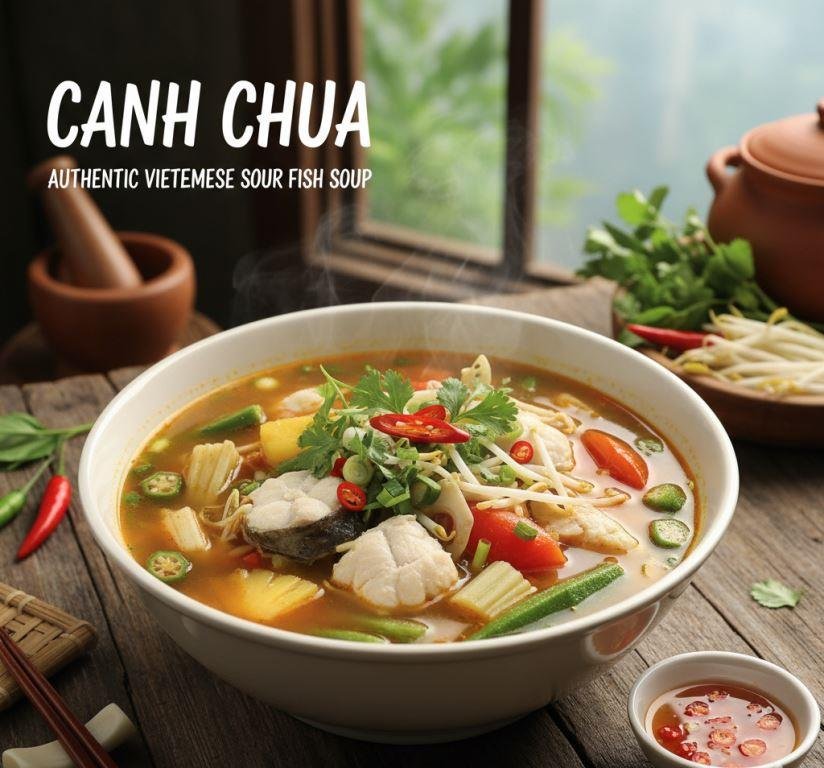
Whenever the weather turned a little chilly (or honestly sometimes when it didn’t), my family would ask,
So… khi nào ăn canh chua?”—basically “When are we having Canh Chua again?” And the answer was usually “soon.”
It’s just one of those soups you can never get tired of. Sweet, sour, salty, and refreshing all at the same time. I don’t know many dishes that hit every corner of your taste buds like that.
Today, I’m sharing my version of Canh Chua, inspired by the traditional recipes I grew up with, mixed with some easier modern swaps because—let’s be honest—we don’t always find every Vietnamese ingredient in the supermarket.
I live in a city where taro stems are like finding gold, so I’ve learned to adapt. But the heart and soul of this soup remains exactly how my mom made it.
What Exactly is Canh Chua?
If you grew up Vietnamese, you already know this bowl. If you didn’t, let me paint the picture.
Canh Chua is a sour soup made with tamarind, packed with fish (usually catfish), pineapple, tomatoes, and loads of crunchy veggies like bean sprouts and taro stem.
The broth is the magic—it’s bright, sweet, tangy, and a little savory from the fish sauce. It’s a soup that never feels heavy.
Actually, it’s the opposite. I can easily drink two bowls and still feel like going for a long walk after.
Traditionally, Canh Chua is served with white rice and a pot of Ca Kho To (Vietnamese caramelized catfish).
The combination is unbeatable: rich, salty braised fish with a refreshing sweet-sour soup. I swear, that duo could fix a bad day.
Growing Up With This Soup
In my house, Canh Chua wasn’t just food—it was a schedule. We literally had it almost every week.
My parents believed anything with this many vegetables counted as “healthy.” And honestly, they weren’t wrong.
You’ve got tomatoes for acidity, pineapple for sweetness, crunchy veggies for texture, and fresh herbs that make the whole pot come alive.
I remember watching my mom peeling the elephant ear stem—taro stem, actually—one long strip at a time.
She would hand me the strands and ask me to throw them away, and I’d pretend I was “helping cook,” even though I was doing the easy part.
Later, when I started cooking on my own, I realized how much patience this vegetable tests. If you can’t find it, celery actually works surprisingly well (don’t tell my mom I said that).
Ingredients You Need (And Substitutions That Actually Work)
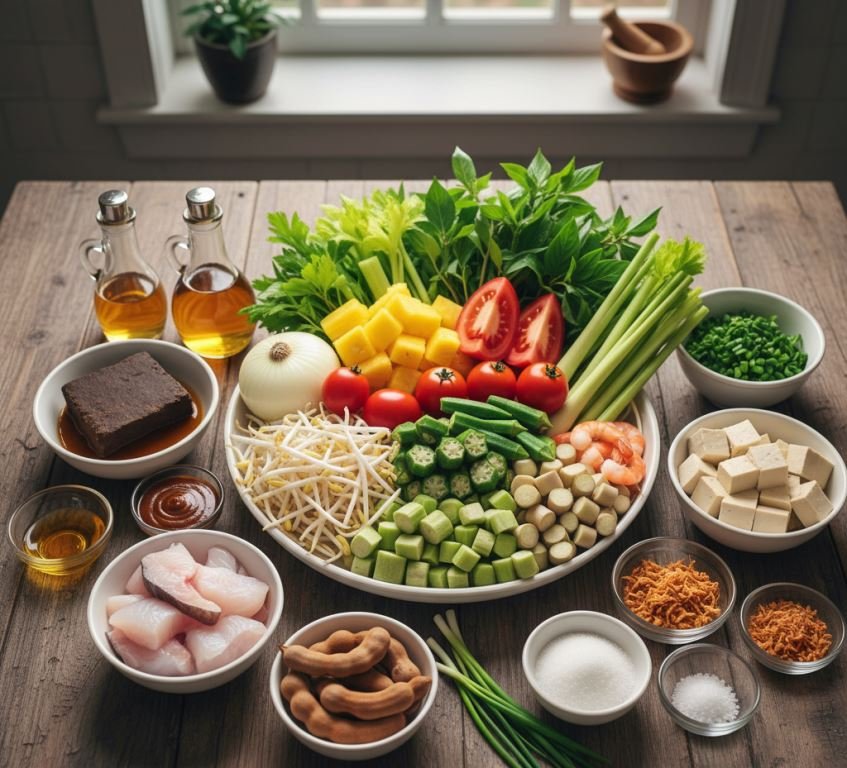
In ingredients I have quick ingredients in soup, it tells that food is basically dependent on ingredients, if ingredients are less then it is useless to make it.
One thing people always get nervous about is the long ingredient list. Yes, Canh Chua has a lot going on—but you do NOT need every single hard-to-find herb to make a delicious pot. I promise.
Here are the basics plus swaps I’ve tried over the years:
Protein
- Catfish (traditional, mild, perfect for absorbing flavor)
- Salmon (modern substitute, a bit fishier but works great if blanched first)
- Shrimp (for Canh Chua Tom, also delicious)
- Tofu (for vegetarian version)
Tamarind
This is the heart of the soup. You can use:
- Fresh tamarind pulp
- Tamarind block (what I normally buy)
- Tamarind concentrate (my lazy day go-to)
Don’t skip this ingredient. Without tamarind, it’s not Canh Chua anymore.
Veggies
- Pineapple – adds the sweetness
- Tomatoes – give color, acidity
- Elephant ear stem/taro stem – for crunch
- Swap: celery
- Bean sprouts – for freshness
- Okra – optional but traditional in many regions
- Lemongrass – brightens the broth
- Onion – for base flavor
Herbs
- Rice paddy herb (Ngo Om) – citrusy, fresh
- Thai basil or lemon basil – great substitute
- Scallions
Seasoning
- Fish sauce
- Sugar
- Salt
- Fried shallots (optional topping, but so so good)
How I Make My Family’s Canh Chua (Step by Step)
This is the method my parents used, slightly simplified to fit my busy life but still full of flavor.
1. Clean and Prepare the Protein
If you’re using catfish:
- Rinse well.
- If it’s slimy, rub it with salt, then rinse again.
This removes the fishy scent and helps the meat stay firm.
2. Make the Tamarind Broth
In a small pot:
- Heat 1 cupof water + tamarind pulp/block.
- Simmer until the pulp dissolves.
- Mash gently with the back of a spoon.
- Strain through a fine sieve.
This step gives you a smooth, clean broth without tamarind seeds floating around.
3. Build the Soup Base
In your large soup pot:
- Heat a little oil.
- Add garlic, chilis (optional), and lemongrass.
- Sauté 20–30 seconds until fragrant.
Then add:
- Tamarind liquid
- Fish sauce
- Sugar
Stir and let it come to a simmer. The smell… trust me, this is when the whole kitchen starts smelling like home.
4. Add the Veggies
Throw in:
- Tomatoes
- Pineapple
- Onion
Add 5–6 cups of water.
Bring to a boil. Reduce to a simmer for 10 minutes so all the flavors blend.
5. Cook the Fish
Add your catfish pieces.
Simmer 8–12 minutes, depending on how thick they are.
Try not to stir too much—catfish breaks apart easily, and you want nice chunks.
Skim off any foam that rises to the top.
6. Add Veggies & Herbs
Turn off the heat and add:
- Bean sprouts
- Taro stem (or celery)
- Okra (optional)
- Scallions
- Rice paddy herb
The residual heat cooks everything perfectly without making it mushy.
7. Taste and Adjust
Canh Chua should be:
- sour (first)
- sweet (second)
- savory (third)
If it’s too sour → add a bit of sugar.
If it’s too sweet → a splash more tamarind.
If it’s flat → fish sauce always fixes it.
How to Serve It
My favorite way:
- A bowl of hot jasmine rice
- A plate of Ca Kho To
- And this soup on the side
If you want extra flavor, dip the fish pieces in straight fish sauce or chili fish sauce. That’s how we grew up eating it.
Canh Chua Recipe
Ingredients
Equipment
Method
- Add the catfish to a bowl and rinse it well. If it feels slimy (mine does alot), rub a little salt on it then rinse again. Set aside.
- In a small pot, heat 1 cup water + tamarind. Let it simmer till the pulp melts down. Mash it with the back of a spoon a bit. Strain it through a fine mesh sieve and keep the clean liquid.
- Heat oil in your big soup pot. Add garlic, chili (if using), and lemongrass. Sauté 20–30 seconds till it smells amazing.
- Add the tamarind liquid, fish sauce, sugar, and a pinch of salt. Stir and bring to a gentle simmer.
- Throw in the tomatoes, onion, and pineapple. Pour in 5–6 cups of water. Bring to a boil, then lower heat and simmer about 10 minutes.
- Add the catfish pieces in gently. Simmer 8–12 minutes. Don’t stir too much or the fish fall apart. Skim off any foam on top.
- Turn off the heat and add bean sprouts, taro stem (or celery), rice paddy herb, and scallions if you like. The hot broth will cook everything just right.
- If it’s too sour → add a bit of sugar.
- If it’s too sweet → more tamarind.
- If it tastes “meh” → fish sauce fixes that.
Notes
If you can’t find bac ha (taro stem), celery works shockingly well, even tho my mom would yell at me for saying that 😅.
– Add more pineapple if you like sweeter soup—sometimes I do that when I’m in the mood.
Storage Tips
If you have leftovers:
- Store the fish separately
If you leave it in the broth, it turns mushy the next day. - Soup lasts 2–3 days in the fridge.
Honestly, though… it rarely lasts that long in my house.
Final Thoughts: Why I Love This Soup So Much
Canh Chua isn’t just a recipe to me—it’s memories of family dinners, winter nights, loud conversations, and my parents telling us to eat more vegetables even though half the vegetables were floating in a sweet-sour broth.
Every time I make this soup, I feel a little closer to home. It’s comforting but refreshing, simple but also kinda elegant in a way only Vietnamese soups can be.
And the best part? You can tweak it however you like. Add more pineapple, skip the okra, use shrimp instead of fish—there’s no one “right” way.
If you’ve never made Canh Chua before, I really hope you give this one a try. It looks like a lot of steps, but trust me, once you do it once, the second time will feel like second nature.
And honestly… nothing beats ladling a hot bowl of this over fresh rice. It hits different.
FAQs:-
Can I use other fish instead of catfish?
Yes, I do it all the time. Salmon or even shrimp works great when I can’t find catfish.
Is tamarind required for Canh Chua?
Honestly yes. Without tamarind, the soup kinda loses its whole sweet–sour vibe.
Why did my fish turn mushy?
Probably it sat in the soup too long. I always store the fish separately so it stays firm.
Can I make this soup vegetarian?
Yep! I just swapped the fish with tofu and used vegetarian fish sauce. Still tastes really good.
How do I make the soup more sour?
Easy—add a bit more tamarind or even squeeze in half a lime. I do that when I want extra tang.
Read More:- Shrimp Tempura — My Go-ALight & Crispy Recipe





1 thought on “Canh Chua Recipe”