
Welcome, Today I’m sharing my warm, homey take on a Gai lan Recipe.
Overview
- Cuisine: Chinese
- Prep Time: 10 minutes
- Cook Time: 10 minutes
- Servings: 2–3
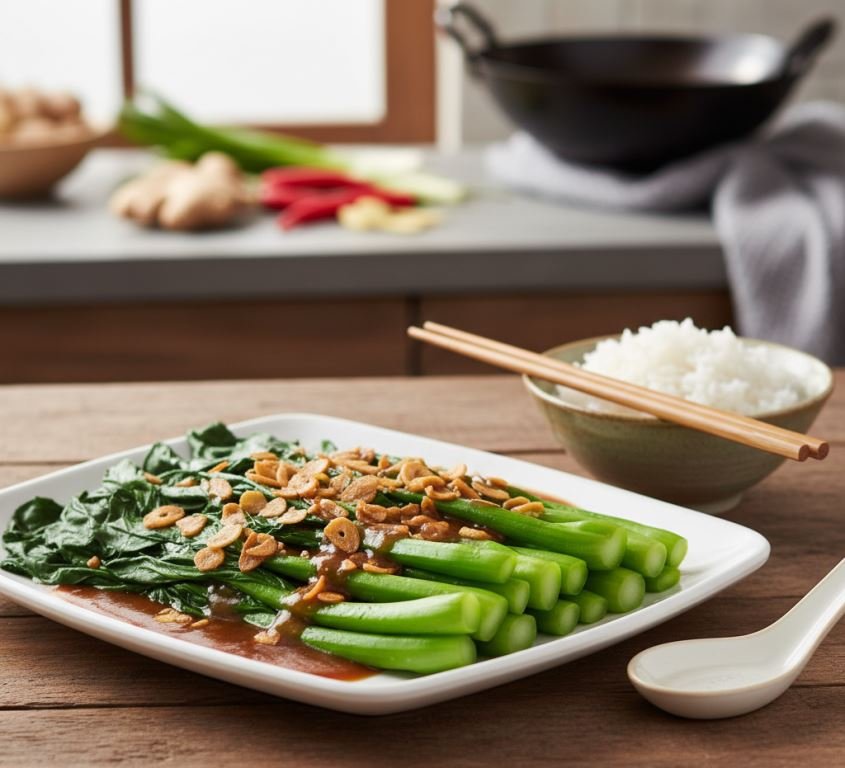
Before I jump into the kitchen, I wanna say something—gai lan has been part of my weekly meals since forever.
I grew up seeing those crunchy, shiny green stems sitting right next to rice and maybe a little protein, and honestly, it never failed to make me smile.
Today I want to share that same joy with you, using a mix of ideas from classic Cantonese cooking and the easy home-style versions many people love.
This recipe is simple, deeply comforting, and works amazing as a side dish or even just over warm rice if you’re like me and sometimes want a veggie-only meal.
Let’s make this delicious plate happen.
Ingredients (Table Format)
| Ingredient | Amount | Notes |
|---|---|---|
| Gai lan (Chinese broccoli) | 1 lb | Choose smaller/medium stems for tenderness |
| Hoisin sauce | 2 tbsp | Adds sweetness + depth |
| Oyster sauce | 1 tbsp | Traditional classic flavor |
| Soy sauce | 1 tbsp | Light or regular soy sauce is fine |
| Shaoxing wine | 1 tsp | Optional but adds great aroma |
| Sesame oil | 1 tsp | For finishing |
| Garlic | 1 clove, sliced | For garnish or stir-fry version |
| Vegetable oil | 1 tbsp | For blanching or sautéing |
| Water | As needed | For boiling or stir-fry sauce |
Equipment You’ll Need
- 1 large pot – for blanching
- 1 wok or skillet – if you choose the stir-fry version
- 1 sharp knife – to trim and slice stems
- 1 vegetable peeler – optional for thick stalks
- 1 mixing bowl – for the sauce
- 1 serving plate – to finish the dish
How to Make Gai Lan (Step-by-Step Instructions)
(This follows the Option A style you prefer—each step its own paragraph.)
Step 1: Prepare the gai lan.
I always start by washing the greens really well. Gai lan can hide dirt in the leaves, so take a moment to rinse everything.
Then trim off about half an inch from the bottom of each stalk. If the stems feel too tough or look thick, I peel just a thin outer layer. This makes them super tender later.
Step 2: Slice thicker stems so everything cooks evenly.
Big bulky stems don’t cook at the same speed as the leaves, so I slice the thicker ones in half lengthwise.
You don’t need to be perfect. I just try to make the pieces kinda similar so they soften evenly and stay crunchy in that perfect way.
Step 3: Mix your sauce.
In a small bowl, I whisk together hoisin sauce, oyster sauce, soy sauce, Shaoxing wine, and sesame oil.
This sauce is really what makes the vegetables pop. If you don’t have hoisin, add a little more oyster sauce plus ½ teaspoon sugar—works great.
Step 4: Bring a pot of water to a boil.
For the classic blanched version, I fill my pot with about 4 cups of water and bring it to a rolling boil.
I add 1 teaspoon of vegetable oil right into the water. It gives the greens a pretty shine after cooking. Once bubbling, I toss in the gai lan.
Step 5: Blanch the gai lan.
Let the vegetables cook for about 3–5 minutes. I flip them once so everything cooks evenly.
I’m looking for bright green leaves and stems that are tender but still a bit crunchy. When they’re ready, I drain them and quickly arrange them on a plate.
Step 6: Drizzle the sauce.
Now the fun part. I pour the sauce all over the warm gai lan. The heat helps the flavors soak in and makes the dish smell amazing.
Sometimes I spoon a little extra sesame oil on top just because I love the aroma.
Step 7: Optional garlic topping.
If I’m in the mood for a little extra flavor, I heat a tablespoon of oil on low and fry thin garlic slices until golden. These crispy garlic chips sprinkled over the greens make every bite kinda perfect.
Stir-Fry Version (If You Want More Flavor Absorption)
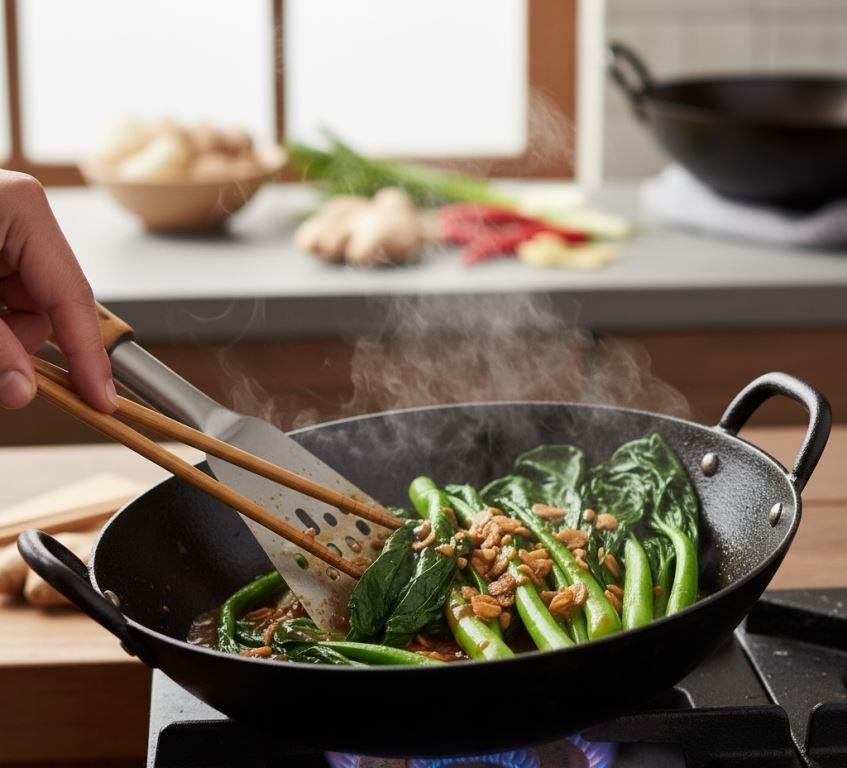
Step 1: Heat your wok.
I add 1 tablespoon of vegetable oil and toss in sliced garlic. Let the garlic sizzle on medium low until it smells wonderful.
Step 2: Add the gai lan stems first.
Stems take longer than leaves, so I cook them for a minute or so before adding the leafy parts.
Step 3: Add leaves and sauce.
Once the stems start to soften, I throw in the leaves and the full sauce. I turn the heat to high and give everything a quick toss.
Step 4: Cook briefly.
The whole thing takes just 2–3 minutes. I don’t wait for the leaves to collapse completely—just wilt a little. Gai lan can get chewy if cooked too long, so I stop early.
Step 5: Taste and finish.
I usually grab one piece to taste and make sure the texture is right. Then I plate it and drizzle a tiny bit more sesame oil.
Recipe Substitutions You Can Try
I like giving options because not everyone has access to Asian grocery stores.
- Broccolini works beautifully if you can’t find gai lan.
- Thai chilies can be added for a spicy twist.
- Sherry wine swaps well for Shaoxing wine.
- More oyster sauce + sugar can replace hoisin.
- Spinach, choy sum, or bok choy also work with the same sauce.
Gai Lan Recipe
Ingredients
Equipment
Method
- Wash the gai lan thoroughly. Trim about ½ inch from the bottom of the stems and peel any thick, fibrous pieces if needed.
- Slice thicker stems in half lengthwise so everything cooks evenly. Keep leaves attached until cooking.
- Mix hoisin sauce, oyster sauce, soy sauce, Shaoxing wine, and sesame oil in a small bowl. Set aside.
- Bring a large pot of water to a boil and add 1 teaspoon vegetable oil. Add the gai lan and blanch for 3–5 minutes, flipping once.
- Drain and transfer to a serving plate. Drizzle the sauce mixture over the warm vegetables.
- (Optional) Fry sliced garlic in a little oil until golden and sprinkle on top.
- Stir-Fry Version (Alternative):
- Heat oil in a wok on medium-low. Add sliced garlic and cook until fragrant.
- Add stems first and stir for 1 minute, then add leaves.
- Pour in the sauce mixture, turn heat to high, and stir-fry 2–3 minutes until leaves are wilted but not mushy.
Notes
Pro Tips to Keep Your Gai Lan Tender, Not Chewy
I swear by these because they never fail me.
I always slice thick stems on a slight angle so they cook faster. I never overcook the leaves—they only need to wilt a little.
And if you see really big, mature gai lan at the store, skip them. Smaller stems always taste sweeter and softer.
Serving Ideas
You can eat it just like at dim sum with rice, or serve it next to chicken, fish, tofu, or noodles. I even mix it into congee when I want something simple and cozy.
The sauce coats rice in such a delicious way that you might find yourself eating more than planned—happens to me every time.
Conclusion:-
I hope you enjoy making this simple gai lan dish as much as I always do. I really love how quick it comes together and how it adds such a fresh, crunchy bite to any meal. Try it with rice or anything you like. I swear it never disappoints, even on busy days.
FaQs:-
Can I use Western broccoli instead of gai lan?
Yes, but the flavor and texture will be different. Gai lan is sweeter and has softer leaves.
Do I need Shaoxing wine?
Nope. It adds aroma but the dish still tastes amazing without it.
Why did my leaves turn dark or mushy?
They were cooked too long. Take them off heat once they wilt lightly.
Do I have to peel the stems?
Only if they feel super tough or old. Young stems don’t need peeling.
Can I make this vegetarian?
Yes! Use vegetarian oyster sauce or mix soy sauce + hoisin.
Read More:- Yard House Maui Pineapple Chicken Recipe




