
Welcome! Today, I’m sharing a comprehensive, practical guide to making pappardelle pasta at home in a way that feels calm, doable, and genuinely enjoyable.
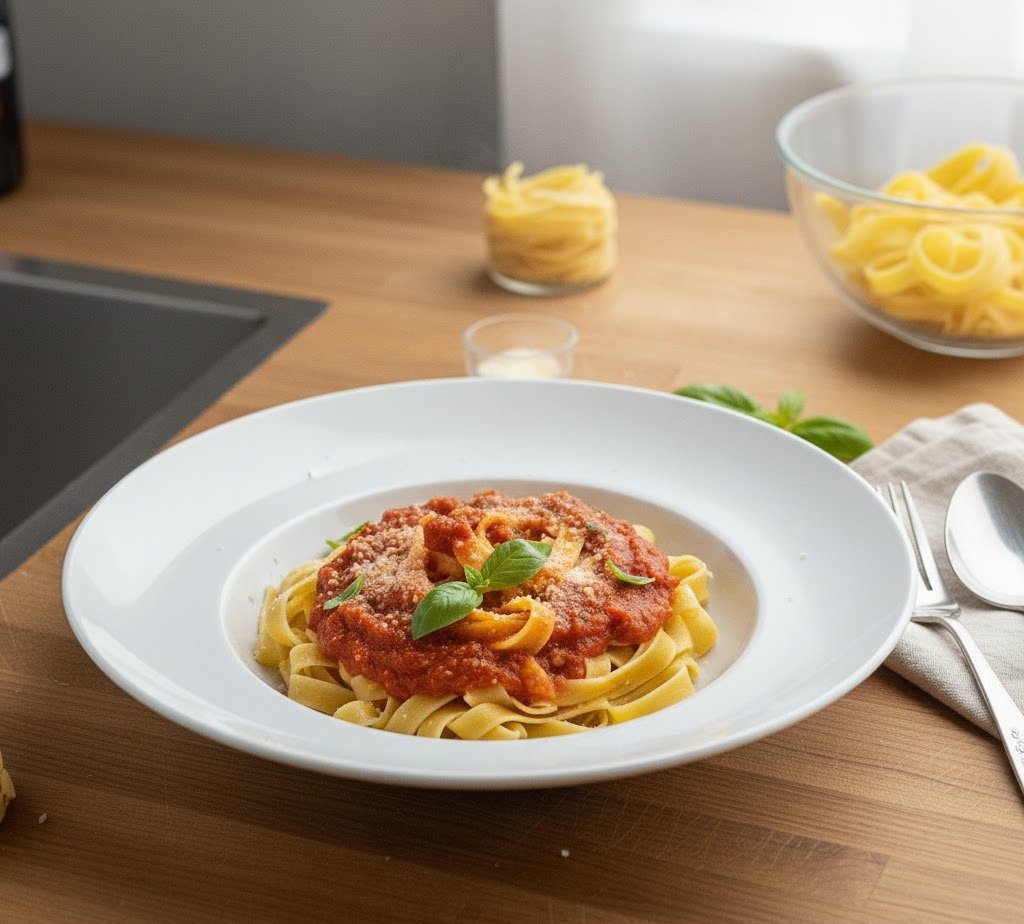
I make fresh pasta when I want to slow down in the kitchen and cook with my hands, and pappardelle is the shape I return to most often.
Hi, my name is Dipendra Kumar. I like cooking food for my family and relatives. I prefer my own method recipe.
It’s wide, rustic, forgiving, and it doesn’t demand perfection. This article walks through everything you need, from understanding what pappardelle is to making the dough, rolling, cutting, cooking, storing, and serving it with confidence at home.
What Is Pappardelle Pasta?
Pappardelle is a long, wide ribbon pasta that originates from Tuscany, Italy. It’s traditionally made with an egg-based dough and cut by hand, which gives it a slightly irregular look.
That handmade quality is intentional and part of its identity. The name comes from the Italian verb “pappare,” which means to gobble or eat eagerly, and that really fits the experience of eating it.
What makes pappardelle special is its width and structure. Those broad ribbons are designed to carry sauce.
Thick ragùs, mushrooms, creamy sauces, and even simple butter-based sauces cling to the pasta instead of slipping off.
Each bite feels full and satisfying, which is why pappardelle is usually paired with hearty, comforting sauces rather than very light ones.
Homemade Pappardelle Pasta
Making pappardelle at home sounds impressive, but it’s actually one of the most beginner-friendly fresh pasta shapes.
You don’t need a special cutter, and you don’t need to worry about making every strand perfectly even.
Everything is hand-cut, and imperfections disappear once the pasta is cooked and tossed with sauce.
I like this recipe because it uses everyday ingredients, doesn’t rely on extreme egg ratios, and creates a dough that’s easy to work with.
It’s suitable for regular home cooking, not just special occasions, and once you’ve made it a couple of times, it starts to feel second nature.
Ingredients
Fresh pasta relies on simplicity, so I keep the ingredient list short and flexible. Quality matters more than complexity here.
| Amount | Ingredient | Notes |
|---|---|---|
| 400 g | “00” flour or all-purpose flour | Both work well |
| 4 large | Eggs | Room temperature is best |
| 1 tbsp | Olive oil | Optional, helps elasticity |
| 1/4 tsp | Fine sea salt | Light seasoning for the dough |
| As needed | Water | Add only if dough feels dry |
| As needed | Semolina flour | For dusting and preventing sticking |
Equipment Needed
You don’t need a professional kitchen setup to make good pappardelle. I’ve made this with very basic tools many times.
| Quantity | Equipment | Notes |
|---|---|---|
| 1 | Clean work surface | Countertop or wooden board |
| 1 | Fork | For mixing eggs and flour |
| 1 | Bench scraper or spatula | Helpful but optional |
| 1 | Rolling pin or pasta machine | Either method works |
| 1 | Sharp knife | For cutting ribbons |
| 1 | Clean kitchen towel | To cover resting dough |
| 1 | Large pot | For cooking pasta |
How to Make Pappardelle Pasta Dough
Step 1
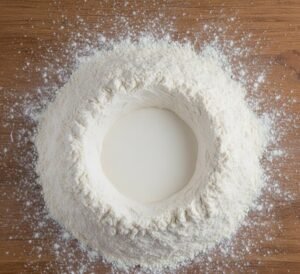
Place the flour directly on your work surface and form it into a mound. Make a wide well in the center, keeping the sides tall enough to hold the eggs.
Step 2
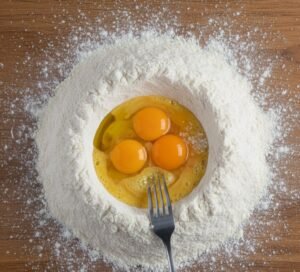
Crack the eggs into the well. Add the olive oil and salt. Using a fork, gently break the yolks and begin whisking, slowly pulling flour in from the edges.
Step 3
As the mixture thickens, switch to using your hands. Bring the dough together into a rough mass.
If the dough feels very dryand noticeable cracking, add water a teaspoon at a time.
Step 4
Knead the dough for about 7 to 10 minutes. Push it away from you with the heel of your hand, fold it back over itself, rotate, and repeat.
The dough should become smooth, elastic, and slightly springy.
Step 5
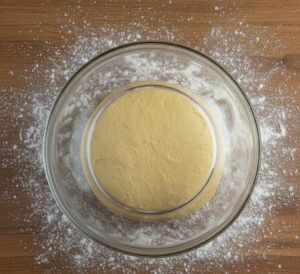
Form the dough into a ball and cover it with a bowl or wrap it lightly. Let it rest at room temperature for at least 30 minutes.
This rest allows the gluten to relax and makes rolling much easier.
How to Roll Pappardelle Pasta
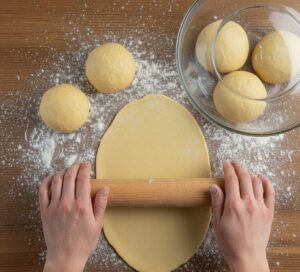
Divide the rested dough into four equal pieces. Keep the pieces you’re not using covered so they don’t dry out.
Flatten one piece slightly with your hands and dust it lightly with flour
If rolling by hand, roll from the center outward, rotating the dough often, until it’s thin enough that you can faintly see your hand through it.
If using a pasta machine, start on the widest setting and gradually work thinner setting, dusting lightly if needed.
I usually stop at a medium-thin setting so the pasta holds its shape well.
How to Cut
Lightly dust the rolled pasta sheet with semolina flour to prevent sticking.
Fold the sheet loosely over itself without pressing down.
Using a sharp knife, cut strips about 1 to 1½ inches wide. Precision isn’t necessary.
Gently unfold the ribbons and lay them flat or shape them into loose nests.
How to Shape Pappardelle Nests
Take a small bundle of cut ribbons and gently twirl them around your fingers.
Place the nest on a tray dusted with semolina flour. Repeat with the remaining pasta, keeping everything lightly floured.
How to Cook Fresh
Bring a large pot of water to a rolling boil and salt it generously. Add the pappardelle and gently stir to separate the ribbons.
Cook for 2 to 4 minutes, depending on thickness. Taste a strand. It should be tender with a slight bite. Drain and immediately toss with sauce, adding a splash of pasta water if needed.
How to Store
If you’re cooking the pasta within a couple of hours, keep the nests lightly floured and covered at room temperature.
For short-term storage, refrigerate in a floured container for up to 24 hours. For longer storage, freeze the nests on a tray until firm, then transfer to freezer bags. Cook directly from frozen without thawing.
Variations
Once you’re comfortable with the basic method, you can start experimenting. Eggless versions work using water, though the texture will be firmer.
Whole wheat or semolina flour adds nuttiness and bite. Vegetable-based doughs like spinach or beet add color and subtle flavor.
Gluten-free blends can work, but they require gentler handling and patience.
Best Sauces
Pappardelle works best with sauces that have some weight. Slow-cooked meat ragù is the classic pairing.
Mushroom sauces cling beautifully to the wide ribbons. Cream-based sauces feel rich and comforting.
Vegetable-forward sauces work well when they’re smooth rather than chunky. Even simple butter, herbs, and grated cheese can be enough when the pasta is fresh.
Recipe Tips
Always let the dough rest before rolling. Keep unused dough covered at all times. Use semolina flour for dusting when possible.
If the dough resists rolling, let it rest a few more minutes. Fresh pasta cooks quickly, so stay close to the stove.
Nutrition Benefits
- Provides protein from eggs
- Supplies complex carbohydrates for energy
- Can be paired with nutrient-dense sauces
- Contains fewer preservatives than store-bought pasta
- Easy to control portion size when homemade
Serving Ideas
I like to serve pappardelle simply so the pasta stays the focus. I gently twirl it with tongs instead of over-handling it.
Heavier sauces pair best with minimal sides, usually just a simple salad and crusty bread. I always finish with freshly grated cheese right before serving.
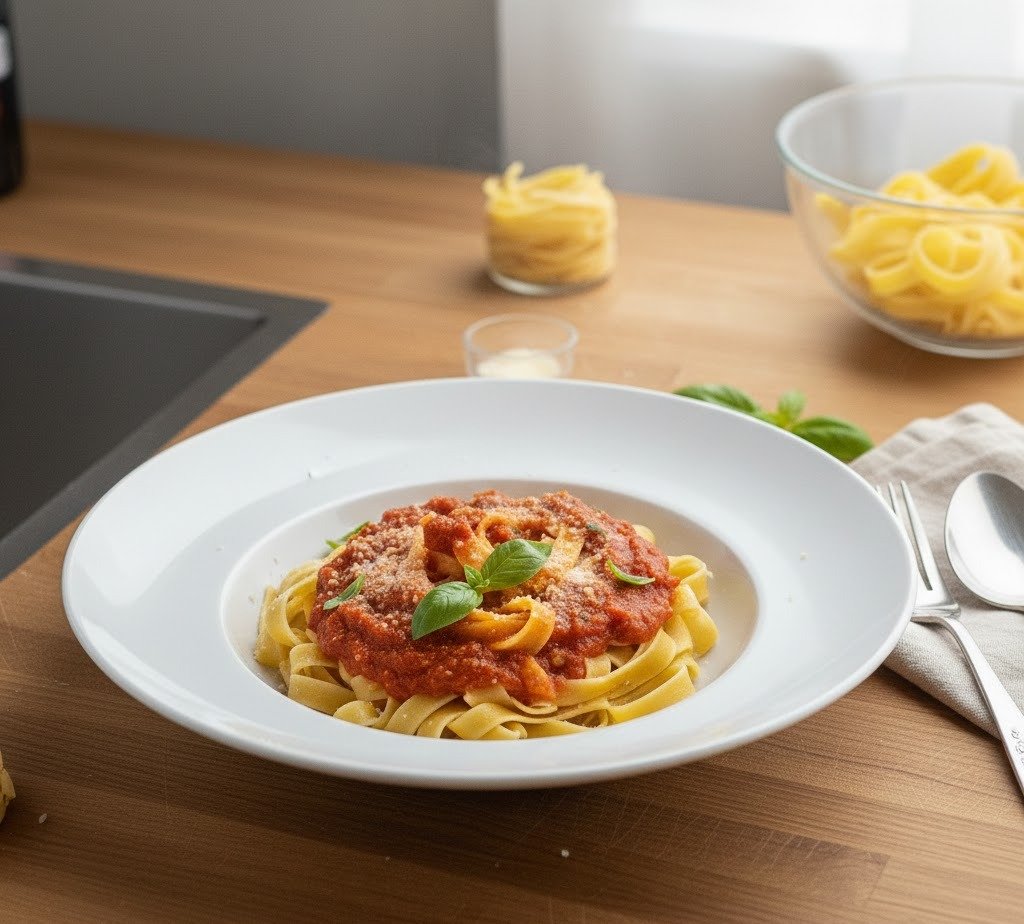
Pappardelle Pasta Recipe
Ingredients
Equipment
Method
- I place the flour directly on my work surface and form a mound. I make a wide well in the center, keeping the sides tall enough to hold the eggs.
- I crack the eggs into the well, add the olive oil and salt, and gently whisk with a fork while slowly pulling flour in from the edges.
- Once the mixture thickens, I switch to my hands and bring the dough together. If it feels too dry, I add water a teaspoon at a time until it forms a rough dough.
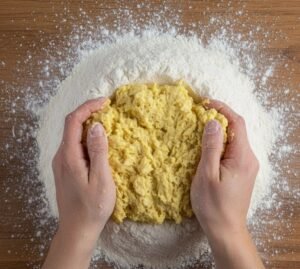
- I knead the dough for about 7–10 minutes, pushing it away with the heel of my hand, folding it back over itself, and rotating as I go, until it becomes smooth and elastic.
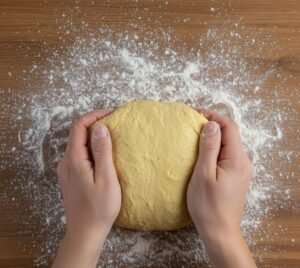
- I form the dough into a ball, cover it with a bowl or wrap it lightly, and let it rest at room temperature for 30 minutes so the gluten can relax.
- After resting, I divide the dough into four pieces and keep the unused pieces covered. I roll one piece at a time until it’s thin enough to see my hand faintly through it.
- I lightly dust the rolled sheet with semolina, fold it loosely, and cut it into 1 to 1½-inch wide strips using a sharp knife.
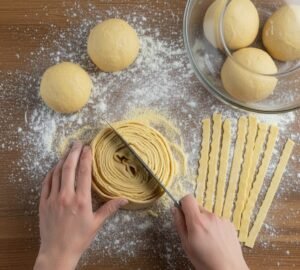
- I gently separate the ribbons and shape them into loose nests, dusting lightly with semolina to prevent sticking.
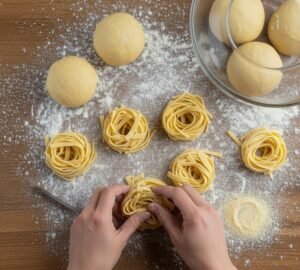
- I bring a large pot of salted water to a boil and cook the pappardelle for 2–4 minutes, until tender with a slight bite.
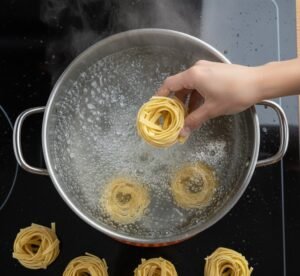
- I drain the pasta and toss it immediately with my favorite sauce, adding a splash of pasta water if needed, and serve right away.
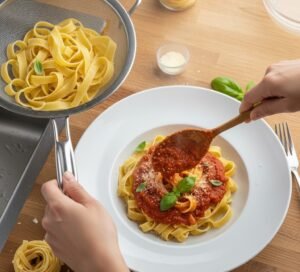
Notes
FAQs:-
What is pappardelle pasta best used for?
Pappardelle is best used with thick, hearty sauces like meat ragù, mushroom sauces, or creamy sauces because its wide ribbons hold sauce very well.
How wide should pappardelle pasta be?
Traditional pappardelle is about 1 inch wide, but cutting it slightly wider is common and totally acceptable for homemade pasta.
How long does fresh pappardelle take to cook?
Fresh pappardelle usually cooks in 2 to 4 minutes, depending on how thick the pasta is rolled. Always taste to check doneness.
Can I make pappardelle pasta without a pasta machine?
Yes, pappardelle can be made entirely by hand using a rolling pin and a knife. A pasta machine is helpful but not required.
Can homemade pappardelle be frozen?
Yes, homemade pappardelle freezes very well. Freeze it in lightly floured nests and cook straight from frozen without thawing.
Conclusion
I love making pappardelle because it forces me to slow down and cook with intention. The dough, the rolling, the cutting, it all feels grounding in a way few recipes do. It doesn’t need to be perfect to be beautiful, and once you’ve made it a few times, it becomes something you do by feel rather than by rules.




