
Welcome, today I’m sharing my complete Rau Ma recipe guide, covering everything you need to know about Pennywort Juice (Nước Rau Má) in one place.
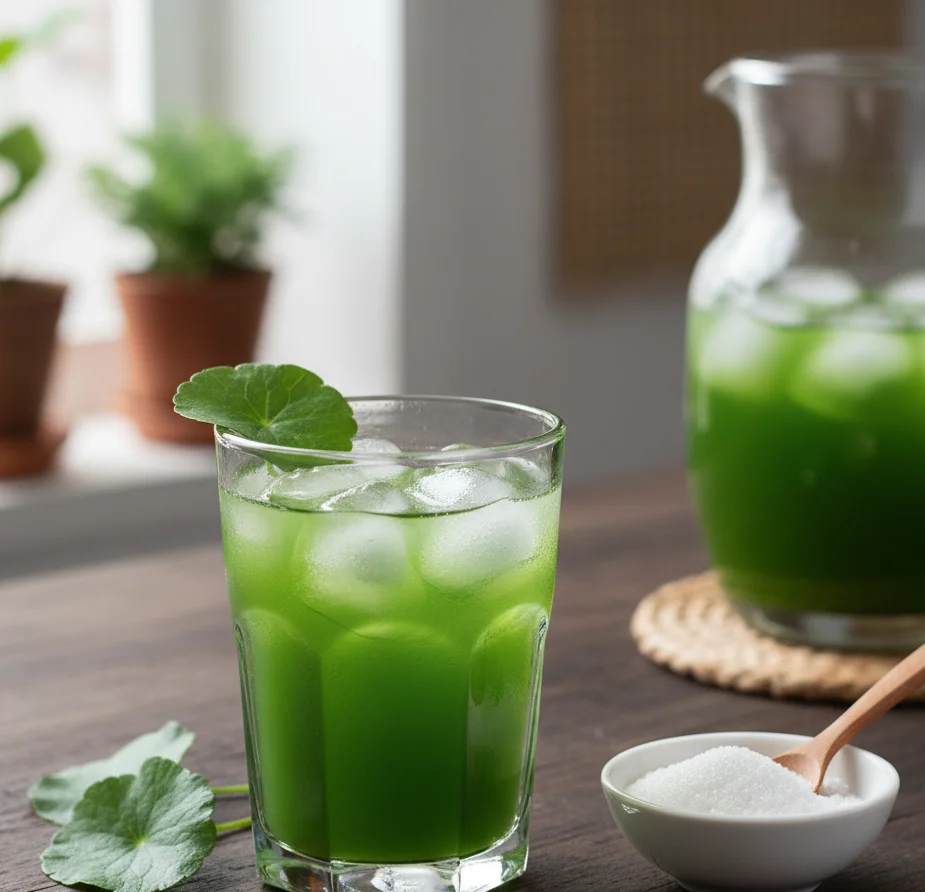
I’ve been drinking rau má for years, and honestly, it’s one of those traditional Vietnamese drinks that just makes me feel lighter and refreshed every time—written the way I actually make it at home.
Before we jump in, here’s a quick recipe overview so you know what to expect.
Vietnamese: Cuisine
Prep time: 20 minutes
Cook time: 0 minutes
Servings: 4–6 glasses
What Is Rau Má?
Rau má, also known as pennywort, is a leafy green herb commonly used in Vietnamese and other Asian cuisines.
In Vietnam, rau má is most popular as a fresh green juice, especially during hot weather.
The leaves are small, round, and bright green, growing close to the ground with thin stems.
Rau má has been used for generations, not just as a drink but also in soups and cooked dishes. For me, though, nothing beats a cold glass of freshly strained rau má juice.
What Is Pennywort Drink (Vietnamese Green Juice)?
Vietnamese green juice usually refers to nước rau má, a drink made by blending fresh pennywort with water, then straining and lightly sweetening it.
It’s not thick like a smoothie, more like a light herbal juice.
Growing up, this drink was everywhere at street markets. It was always served over ice, slightly sweet, and incredibly refreshing after a hot day outside.
What Does Rau Má Taste Like?
Rau má has a mild, earthy flavor. Some people say it tastes a bit grassy or similar to asparagus.
On its own, it can be slightly bitter, which is why sugar or another sweetener is usually added. Once sweetened properly, the taste becomes very smooth and easy to drink.
I personally like it lightly sweet, not overpowering, so you can still taste that fresh green flavor.
Pennywort Health Benefits
Rau má is well known in traditional Asian medicine for its cooling properties. It’s believed to help balance the body, especially when you’ve been eating lots of fried or spicy food.
Nutritionally, pennywort contains vitamins B and K, along with minerals like magnesium, calcium, and zinc.
Many people also believe it supports digestion, circulation, and skin health. I won’t claim it’s a miracle drink, but I do feel good drinking it regularly, especially in summer.
Ingredients for Rau Ma Recipe
Below is the ingredient table for a classic Pennywort Juice (Nước Rau Má). You can adjust the sweetness and water to your liking.
| Amount | Ingredient | Notes |
|---|---|---|
| 1/2 lb | Fresh pennywort | Leaves and tender stems |
| 8 cups | Drinking water | Adjust for thickness |
| 1/4 cup | Sugar | Or to taste |
| Optional | Ice | For serving |
Equipment You’ll Need
Making rau má doesn’t require anything fancy. A basic blender works just fine.
| Amount | Equipment | Notes |
|---|---|---|
| 1 | Blender | Any standard blender |
| 1 | Fine mesh strainer | Or cheesecloth |
| 1 | Large bowl | For collecting juice |
| 1 | Spoon or spatula | For pressing pulp |
How to Wash Pennywort Properly
This step is really important because pennywort can be very dirty.
Step 1
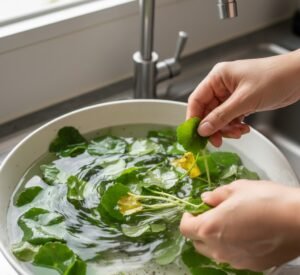
I start by filling my kitchen sink with cold water and adding all the pennywort. I gently swirl it around to loosen dirt and sand.
Step 2
I lift the greens out and discard the dirty water, then repeat this process at least two more times until the water looks clean. Sometimes I wash it three times, just to be safe.
Step 3
Once clean, I drain the pennywort in a colander and remove any wilted or damaged leaves.
How to Make Rau Ma Juice (Step-by-Step)
This is my go-to method and it never fails.
Step 1
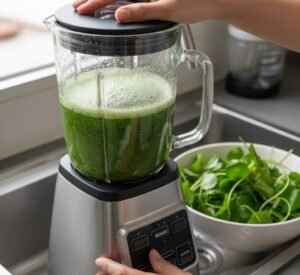
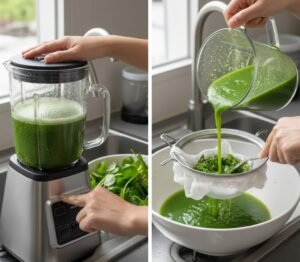
I add half of the cleaned pennywort into the blender, followed by 4 cups of water.
Step 2
I blend on medium speed for about 45–60 seconds, just until the leaves are fully broken down. I avoid blending for too long because it can make the juice foamy.
Step 3
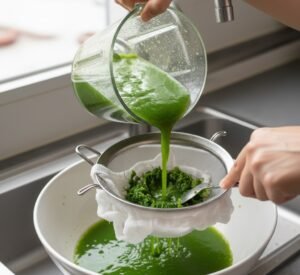
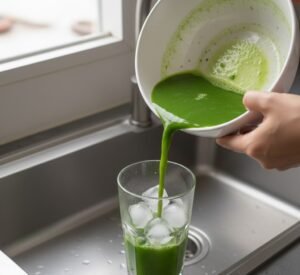
I pour the blended mixture through a fine mesh strainer into a large bowl. Using a spoon or spatula, I press down firmly on the pulp to extract as much juice as possible.
Step 4
I repeat the same blending and straining process with the remaining pennywort and water.
Step 5
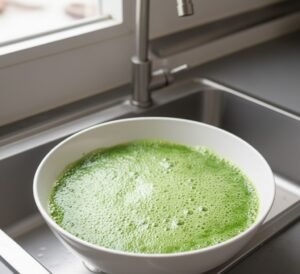
Once all the juice is collected, I skim off any foam on top and discard it.
Step 6
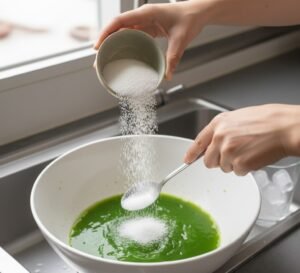
I add sugar and stir until completely dissolved. I always taste and adjust the sweetness at this stage.
Step 7
I serve the rau má chilled or over ice. It’s best enjoyed fresh.
Why This Rau Ma Recipe Works
This method keeps the flavor clean and fresh without overpowering bitterness. Blending in batches helps the leaves break down evenly, and straining ensures the juice is smooth.
Dissolving sugar at the end gives better control over sweetness, which is important because everyone likes rau má a little differently.
Variations and Customizations
Rau má is very flexible, and I love changing it up sometimes.
You can blend in cooked mung beans for a creamier drink, or top it with sweetened coconut milk for a richer version.
Some people also mix rau má with pandan or add a splash of coconut water instead of plain water.
If you prefer it less green-tasting, just increase the water slightly and add less pennywort.
Substitutes for Pennywort
If you can’t find pennywort, you can still make green juices using other greens like spinach, celery, kale, or parsley. The flavor will be different, but the process stays the same.
That said, rau má has a unique taste that’s hard to fully replace.
Storage and Make-Ahead Tips
Rau má juice is best fresh, but it can be stored.
I keep it in an airtight container in the refrigerator and drink it within 2–3 days.
Over time, the juice oxidizes and loses freshness. You may notice color changes, which is normal.
For longer storage, you can freeze rau má juice for up to 1 month. I usually freeze it in small containers so I can thaw only what I need.
Serving Suggestions
I usually serve rau má over ice on hot days. It also pairs really well with rich Vietnamese dishes because it cleanses the palate.
Sometimes I drink it plain in the morning; other times, as a midday refresher. Either way, it’s light and easy on the stomach.
Rau Má Recipe
Equipment
- 1 Blender Any decent blender works. I use a medium-speed so it doesn’t get super foamy.
- Fine Mesh Strainer or Cheesecloth Helps remove all the pulp for smooth juice.
- Large Bowl For catching the strained juice.
- Knife & Cutting Board Only needed if the bunches are super long.
Ingredients
- 1/2 lb fresh pennywort rau má
- 8 cups water
- 1/4 cup sugar add more or less to your liking
Instructions
Wash the pennywort really well.
- I soak it in a big bowl or my sink and swirl it around. Pennywort carries quite a bit of dirt sometimes, so I wash it 2–3 times until the water looks clean. Toss out any yellow or sad-looking leaves.
Blend the first batch.
- Add half of the pennywort into the blender with 4 cups of water. Blend on medium speed until the leaves look fully broken down but not super foamy. If you blend too hard, it gets too much bubbles on top.
Strain the juice.
- Pour the blended mixture through a fine strainer or cheesecloth into a bowl. Press or squeeze the pulp to get every drop out. Discard the leftover pulp.
Repeat the same steps with the second half.
- Blend the remaining pennywort with the other 4 cups of water, then strain again.
Sweeten it.
- Stir in the sugar while the juice is fresh. Adjust depending on how sweet you like your drinks. Some days I add more, some days less.
Let the juice rest for a few minutes.
- This helps the foamy bubbles settle a bit. Not required, but I kinda like doing it.
Serve over ice.
- Rau má tastes best chilled. Pour over ice cubes and drink right away. So refreshing.
Notes
- I always try to use pennywort within a day or two because it wilts quick.
- You can swap sugar for honey or any other natural sweetener.
- If you want a creamier dessert version, try adding mung bean paste or a splash of coconut milk (so good, but changes the vibe completely).
- Store leftovers in a jar in the fridge for up to 2–3 days. It loses some freshness after that.
Conclusion:-
Rau má is one of those simple recipes that carries so much tradition and comfort. I love how easy it is to make, how affordable it is, and how refreshing it feels every time I drink it. If you’ve never tried making rau ma at home, I really hope you give it a go. Once you do, store-bought versions just won’t compare, trust me.
If you’ve ever walked through the streets of Vietnam on a hot, humid afternoon, you probably know that nothing hits the spot quite like a cold glass of nước rau má—also known as pennywort juice.
This simple, vibrant green drink has been a staple in Vietnamese homes and street stalls for generations.
Read More:- Korean Milk Cream Donut Recipe





1 thought on “Rau Ma Recipe”