
Welcome, today I’m so excited to share my Snow Fungus Soup Recipe, one of my favorite comforting Asian dessert soups that I grew up drinking whenever I felt a little under the weather.
This gently sweet “tong sui” is soothing, nourishing, and honestly just makes me feel hugged from the inside.
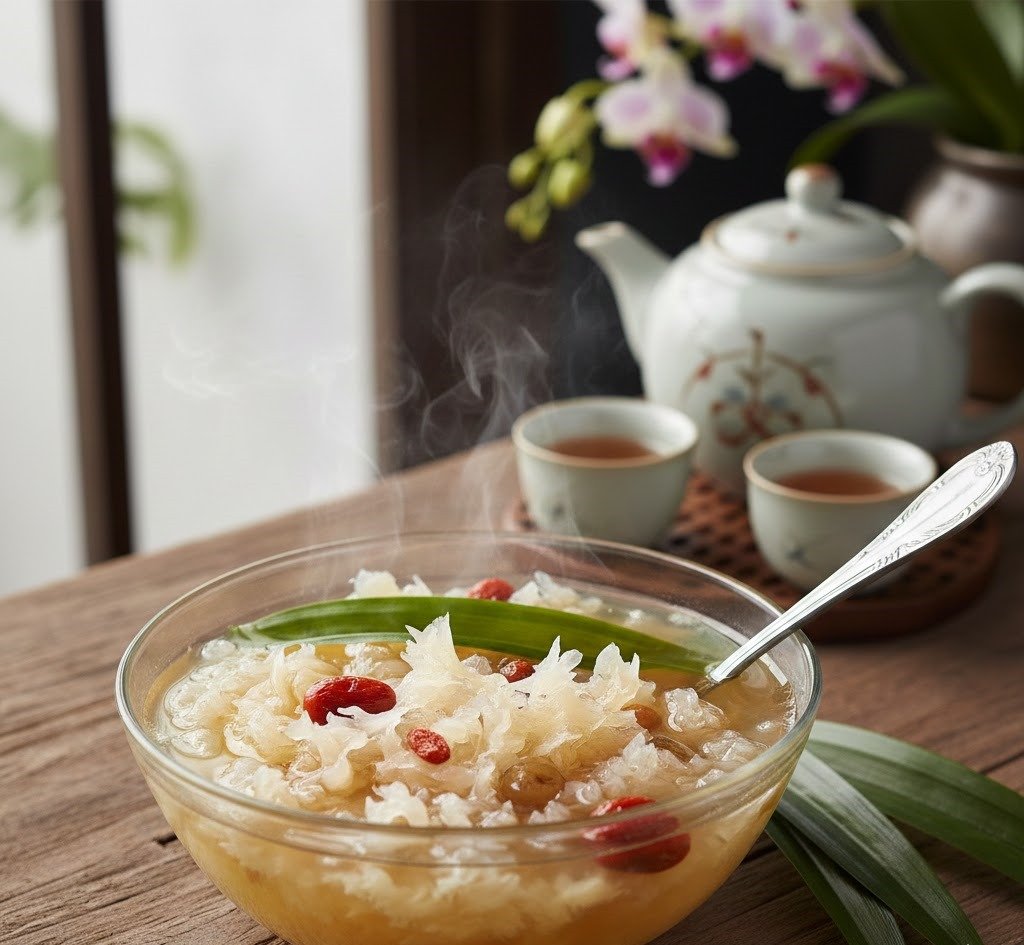
It’s a classic in many Chinese homes, especially because snow fungus is believed to support lung health, improve skin hydration, and boost overall wellness.
Before we get cooking, here’s a little quick overview, like I always make for my recipes:
- Cuisine: Asian / Chinese
- Prep Time: 1 hour
- Cook Time: 1 hour
- Servings: 6
Now let’s dive into this beautiful, cozy bowl of Snow Fungus Soup.
What Is Snow Fungus?
Snow fungus, sometimes called white fungus, snow ear, or white wood ear, is a translucent, jelly-like mushroom used widely in Chinese cooking.
As a kid, I always thought it looked like something pulled out of the ocean—wobbly, soft, chewy, and kind of magical.
It has no strong flavor on its own, but once simmered, it becomes plump, silky, and slightly crunchy.
It’s traditionally valued for its nourishing qualities. Many believe it supports the lungs, hydrates the body, boosts immunity, and even helps with skin elasticity.
My mom used to tell me Chinese women especially love it because it’s “good for beauty,” and honestly, I totally get why—it makes my skin feel nice after drinking it for a few days.
Ingredients Table
Here’s everything you’ll need to make this soothing Snow Fungus Soup with pear, inspired by classic Cantonese homecooking and flavored gently with goji berries, lotus seeds, and rock sugar.
| Ingredient | Amount | Notes |
|---|---|---|
| Dried snow fungus | 1 oz | Rehydrated, tough center removed |
| Asian pear | 1 whole | Peeled and cut into 1-inch chunks |
| Dried lotus seeds | 1/3 cup | Rehydrated, sprouts removed |
| Dried lily bulbs | 1/3 cup | Rehydrated |
| Dried south almonds | 1 tbsp | Sweet apricot kernels |
| Dried north almonds | 5 pieces | Bitter apricot kernels; use exactly the amount |
| Dried goji berries | 1–2 tbsp | Rinse before adding |
| Rock sugar | 3–4 oz | Adjust to taste |
| Water | 8 cups | Add extra if needed |
Equipment You’ll Need
• 1 large soup pot
• 1 bowl for soaking dried ingredients
• 1 pair of scissors for trimming snow fungus
• 1 peeler
• 1 knife and cutting board
Step-by-Step: How to Make Snow Fungus Soup
Step 1
I start by rinsing the dried lotus seeds, lily bulbs, south almonds, and north almonds. Then I place them all into a bowl with about 1 cup of hot water.
I cover and let everything soak for around one hour until the lotus seeds soften enough that I can split them.
Step 2
In another bowl, I rehydrate the dried snow fungus using room-temperature water. It only takes around 5 minutes for it to puff up into a large, jelly-like cluster.
I drain the water, flip it over, and trim off the hard, brown, circular core—that part is tough and not fun to eat.
Step 3
I tear or cut the snow fungus into small, bite-sized pieces. I usually aim for pieces roughly the size of broccoli florets. It cooks faster and looks prettier in the soup this way.
Step 4
When the lotus seeds are fully plump, I split them one by one and remove any green sprouts in the center.
They can taste bitter, so don’t skip this part! I also keep the soaking water because it adds extra fragrance and nutrients to the soup.
Step 5
Next, I peel the Asian pear, slice out the core, and cut it into 1-inch chunks. Pear adds natural sweetness and helps make the soup soothing for the throat.
Step 6
Now I bring everything together. I add the rehydrated lotus seeds, lily bulbs, almonds, and their soaking water into my large pot. Then I add the pear pieces and pour in 8 cups of fresh water.
Step 7
I bring the pot to a boil, then lower it to a gentle simmer. I cover the pot and let it cook for about 45 minutes.
This slow simmer lets the almonds, lily bulbs, and lotus seeds soften and release their subtle flavor into the broth.
Step 8
Once everything has softened nicely, I add the snow fungus, goji berries, and rock sugar. I simmer for another 10 minutes so the snow fungus becomes plump and silky.
Step 9
I taste and adjust the sweetness if needed. And that’s it—my snow fungus soup is ready! Sometimes I let it cool and chill it in the fridge because it tastes super refreshing when cold.
Why I Love This Snow Fungus Soup
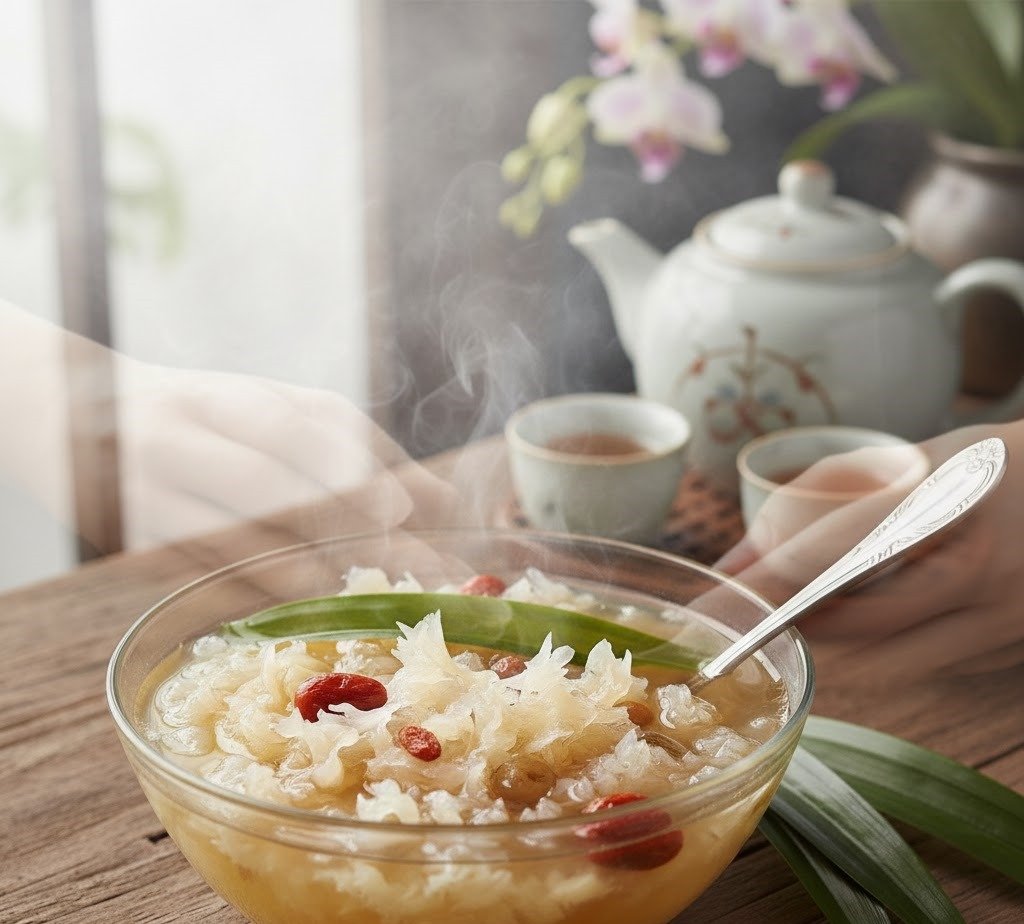
There’s something special about the texture of snow fungus—soft, wobbly, a little crunchy, but so pleasant.
Plus, the Asian pear melts into the broth and gives it gentle, fruity sweetness. The lotus seeds and lily bulbs add depth and nourishment, and the goji berries add color and tiny bursts of sweetness.
To me, this soup isn’t just a recipe. It’s a childhood memory in a pot. Every time I sip it, I feel comfort, like my mom is still watching over me with a warm bowl ready whenever I’m tired or sick.
Snow Fungus Soup Recipe
Ingredients
Equipment
Method
- Rinse the dried lotus seeds, dried lily bulbs, south almonds, and north almonds. Put them in a bowl with about 1 cup hot water, cover, and let rehydrate for ~1 hour until the lotus seeds are soft enough to split.
- In a separate bowl, soak the dried snow fungus in room-temperature water for about 5 minutes until puffed. Drain, trim off the tough round core with scissors, then tear the fungus into bite-sized pieces.
- Split the rehydrated lotus seeds and remove any green sprouts in the center (they can be bitter). Save the soaking water — it’s good to add to the soup.
- Peel the Asian pear, remove the core, and cut into 1-inch chunks.
- In your large soup pot, add the rehydrated lotus seeds, lily bulbs, south and north almonds, the soaking water, and the pear chunks. Pour in 8 cups of fresh water.
- Bring the pot to a boil, then reduce to a gentle simmer. Cover and simmer about 45 minutes, or until the lotus seeds and lily bulbs are softened to your liking. Add water if too much evaporates.
- Add the snow fungus, goji berries, and rock sugar. Simmer another 5–10 minutes so the fungus turns plump and the sugar dissolves. Taste and adjust sweetness.
- Serve warm or chill and enjoy cold. Leftovers keep 3–4 days in the fridge and thicken pleasantly as they cool.
Notes
- Snow fungus expands a lot — a little goes a long way.
- Remove lotus seed sprouts carefully to avoid bitterness.
- Rock sugar gives a mellow sweetness; reduce if using white sugar.
- If you don’t have Asian pear, half a papaya works as a substitute for sweetness.
- North apricot kernels are bitter and mildly toxic in large amounts — do not increase that quantity.
Tips to Make It Even Better
• Soaking time matters. Let the lotus seeds soak long enough to remove the sprouts.
• Don’t use too much snow fungus. It expands 3–4 times its size.
• Adjust sugar gradually. Rock sugar melts slowly, so give it time.
• It thickens as it cools. Leftovers almost get syrupy, which I love.
• You can totally add jujubes or dried longan if you like deeper sweetness.
FAQs
Can I use regular pears instead of Asian pears?
Yes, but Asian pears give a crisper texture and sweeter flavor.
Why is snow fungus sometimes bitter?
Usually, it’s because the lotus seeds still have sprouts in the middle. Once I learned to pull them out, the bitterness disappeared.
Can I swap the Asian pear?
Yes, sometimes I use half a papaya if I don’t have a pear. It makes the soup sweeter and creamier.
Why are there two kinds of almonds?
South almonds are sweet and safe in larger amounts. North almonds are bitter and only used in small pieces for aroma and benefits. Keep the amounts exact.
Does this soup store well?
Yes, I keep it in the fridge for 3–4 days. It thickens beautifully and tastes refreshing cold.
Conclusion
I really hope you enjoy this cozy Snow Fungus Soup as much as I do, because every time I make it, I feel like I’m bringing a little bit of comfort and memory back into my kitchen.
It’s simple, nourishing, and honestly, kind of magical in how it makes me feel better, even on rough days. I can’t wait for you to try it too!
Read More:- Braised Instant Pot Pork Belly Recipe





1 thought on “Snow Fungus Soup Recipe”