Cha Lua, also called Gio Lua in the north, is a silky Vietnamese pork roll that appears everywhere in our cuisine.
You’ll find it tucked into banh mi, sliced onto banh cuon, floating in bun thang, and honestly just eaten cold straight from the fridge like a little treat.
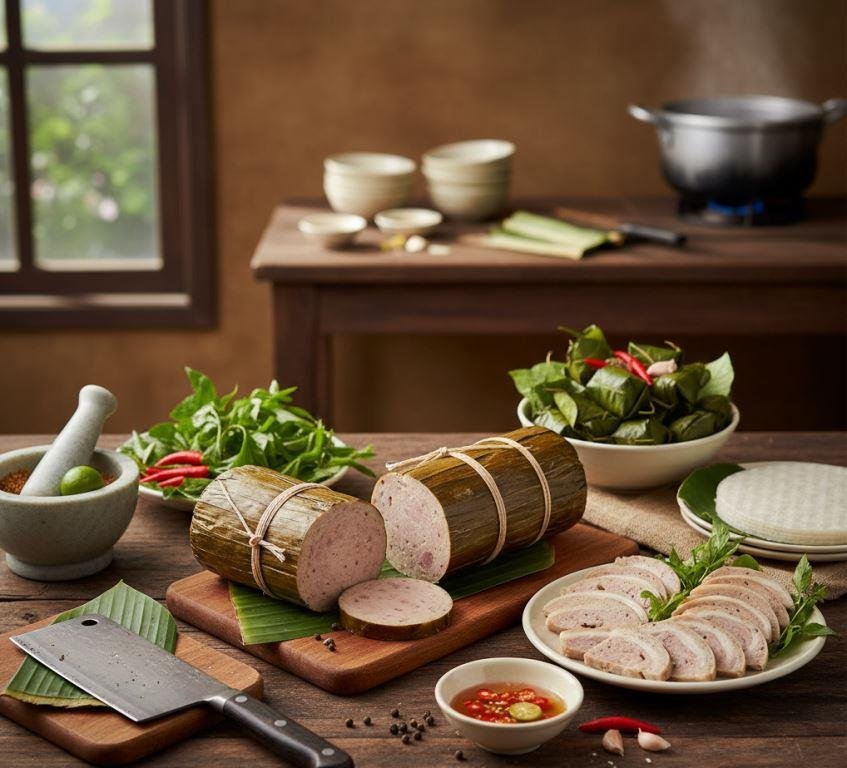
It’s smooth, pale, lightly seasoned, and has that springy bounce that makes it so addictive.
I grew up always having a roll in the fridge, and no matter what my mom said, I always cut a tiny piece for “morsel” before she cooked with it.
Now that I make it at home, I appreciate how much technique goes into turning simple pork into something so special.
Ingredients
| Ingredient | Amount |
|---|---|
| Pork loin or ground pork | 1 lb |
| Fish sauce | 2 tbsp |
| Granulated sugar | 2–2½ tsp |
| Garlic powder (or 2 cloves garlic) | ½ tsp |
| White pepper | ¼ tsp |
| Corn starch or tapioca starch | 1 tbsp |
| Baking powder | 1 tsp |
| Salt | ¼ tsp |
| Ice water | ¼ cup |
| Banana leaves | 2 sheets (12 x 12 in) |
Equipment You Will Need
- Food grinder or butcher-ground pork
- Stand mixer with paddle
- Mixing bowls
- Food processor (optional)
- Freezer-safe Ziploc bag
- Plastic wrap
- Banana leaves
- Aluminum foil
- Kitchen twine
- Steamer pot
Using a Food Processor vs a Grinder
A grinder gives the smoothest texture, especially when you grind the pork twice. A processor works, but only if you’re patient and process long enough to break down every little piece.
Cleanup is harder, too. If you can get your butcher to grind pork loin, that’s honestly the best shortcut.
How to Make Vietnamese Ham
Step 1: Grind the pork loin if you’re starting from whole meat. Run it through the grinder twice using the fine plate. Keeping everything cold helps preserve the final texture.
Step 2: Move the ground pork into a bowl and stir in the fish sauce, sugar, garlic powder, white pepper, corn starch, baking powder, salt, and ice water. Mix until the seasoning blends evenly into the meat.
Step 3: Transfer the mixture into a freezer-safe Ziploc bag. Flatten it thin so it chills quickly, then freeze for about one and a half hours until the meat is very cold but not frozen solid.
Step 4: Empty the chilled meat into a stand mixer bowl. Whip it at medium speed for about five minutes, then raise the speed a bit higher and whip for another five minutes until it becomes smoother and lighter in color.
Step 5: Place the whipped mixture back into the Ziploc bag, flatten again, and freeze for around forty minutes. This re-chilling step keeps the proteins tight and helps the texture turn bouncy later.
Step 6: Return the chilled mixture to the stand mixer and whip on high for about ten minutes. The mixture should look pale, silky, and almost airy when it’s ready for shaping.
Step 7: Spread a sheet of plastic wrap on your counter. Spoon the paste onto it and shape it into a tight cylinder about three inches thick and seven inches long. Use the plastic wrap to roll and tighten the shape firmly.
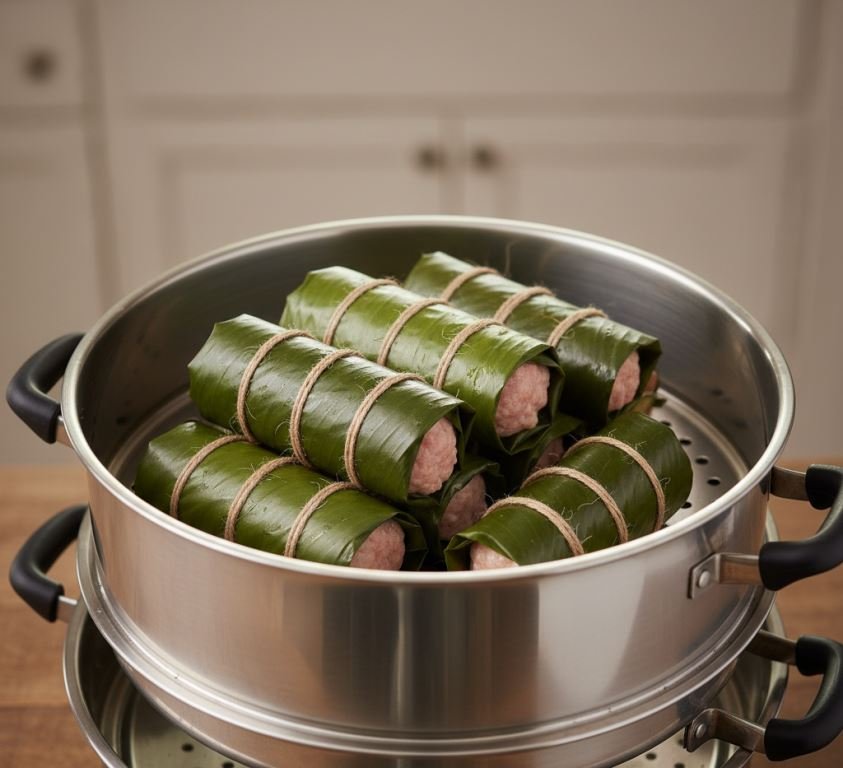
Step 8: Grease one banana leaf lightly with oil, place a second leaf on top, and set the pork cylinder in the center. Roll tightly, fold in the ends, then wrap the entire banana-leaf package in aluminum foil. Tie with kitchen twine so everything stays snug.
Step 9: Prepare your steamer with simmering water. Place the wrapped roll inside, cover, and steam for about thirty-two minutes. If boiling instead, submerge the foil-wrapped roll fully in water and cook for about thirty-five to forty minutes.
Step 10: Remove the roll and let it cool for at least one hour before slicing. Cooling allows the structure to set, so the slices come out clean and smooth.
Vietnamese Ham Recipes
Ingredients
Equipment
Method
- I grind the pork twice to make it super fine and smooth. Keeping the pork very cold here makes a huge difference later.
- I mix the fish sauce, sugar, garlic powder, white pepper, corn starch, baking powder, salt, and ice water together in a bowl until everything is blended well.
- I add the pork to the seasoning base and mix it until the texture turns sticky. That sticky feel is actually what we want.
- I spread the mixture flat inside a Ziploc freezer bag and freeze it for about one and a half hours. This helps the proteins stay tight.
- I move the mixture to my stand mixer and whip it until the color turns pale and the texture starts looking smoother.
- I chill the mixture again for about forty minutes, then whip it on a higher speed until it turns silky and creamy looking.
- I place the mixture on plastic wrap and roll it tightly into a cylinder shape. The tighter you roll, the nicer it slices later.
- I wrap the cylinder in greased banana leaves, then in foil, and tie everything with kitchen twine so it stays firm while steaming.
- I steam the wrapped roll for around thirty-two minutes. The banana leaves add a really nice smell during this step.
- Step 10: Cool Before Slicing
- I let the roll cool for at least an hour before slicing. If it’s sliced hot, it won’t hold its shape properly.
Notes
Why Whipping Matters
Whipping introduces air bubbles, lets the protein network develop, and creates the iconic bouncy texture.
If you ever had cha lua that felt dense, it probably wasn’t whipped enough or wasn’t kept cold during the process.
Tips for Perfect Texture
Always keep the meat cold. Grind twice if possible. Avoid brown sugar or black pepper if you want the pale traditional color.
Tie the roll firmly but not so tight that it bursts during steaming. If the mixture looks sticky and pale, you’re doing everything right.
How to Eat Cha Lua
Cha lua is so versatile. Slice it into banh mi, serve it with banh cuon, add it into noodle soups like bun thang or bun bo hue, or pan-fry slices until golden on the edges. I often eat small slices cold with rice and dipping sauce — simple and so satisfying.
Storage
Store cha lua in an airtight container in the fridge for three days. For longer storage, freeze the roll while still wrapped tightly, then thaw in the fridge when ready to use.
Conclusion
My kitchen always feels a bit happier when a fresh roll of cha lua is cooling on the counter. It’s one of those foods that carries memories, comfort, and tradition all at once.
I hope this version helps you make your own at home, and I hope it brings the same warm feeling to your table. Thanks for spending your time here with me, and wishing you delicious moments ahead.
FAQs:-
Why is cha lua bouncy?
The cold pork is whipped until smooth, which creates a firm, springy texture.
Can I use store-bought ground pork?
Yes, but the flavor and texture will be slightly different since store-ground pork is usually fattier than pork loin.
Do I need banana leaves?
Banana leaves add aroma and help shape the ham, but you can use foil if you absolutely can’t find them, though the flavor won’t be the same.
How long does homemade cha lua last?
It lasts about three days in the fridge when stored airtight, or up to a month in the freezer.
Can I boil instead of steaming?
Yes, you can boil the foil-wrapped roll for 35–40 minutes, as long as it’s tightly sealed so water doesn’t seep in.