Ingredients
Equipment
Method
Step 1
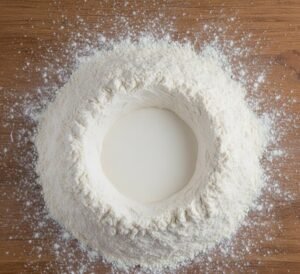
- I place the flour directly on my work surface and form a mound. I make a wide well in the center, keeping the sides tall enough to hold the eggs.
Step 2
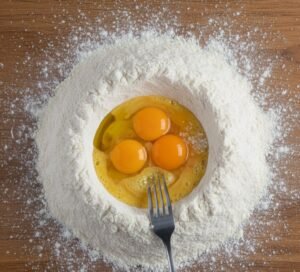
- I crack the eggs into the well, add the olive oil and salt, and gently whisk with a fork while slowly pulling flour in from the edges.
Step 3
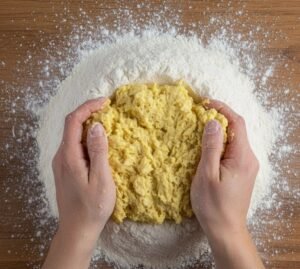
- Once the mixture thickens, I switch to my hands and bring the dough together. If it feels too dry, I add water a teaspoon at a time until it forms a rough dough.
Step 4
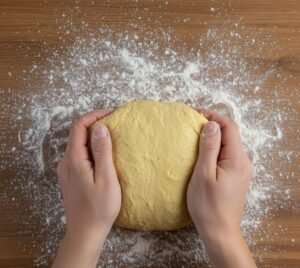
- I knead the dough for about 7–10 minutes, pushing it away with the heel of my hand, folding it back over itself, and rotating as I go, until it becomes smooth and elastic.
Step 5
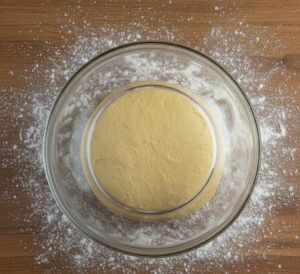
- I form the dough into a ball, cover it with a bowl or wrap it lightly, and let it rest at room temperature for 30 minutes so the gluten can relax.
Step 6
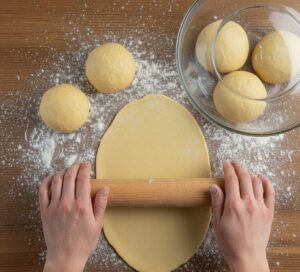
- After resting, I divide the dough into four pieces and keep the unused pieces covered. I roll one piece at a time until it’s thin enough to see my hand faintly through it.
Step 7
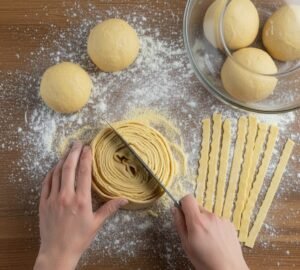
- I lightly dust the rolled sheet with semolina, fold it loosely, and cut it into 1 to 1½-inch wide strips using a sharp knife.
Step 8
- I gently separate the ribbons and shape them into loose nests, dusting lightly with semolina to prevent sticking.
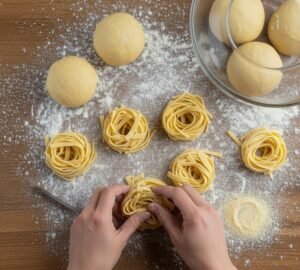
Step 9
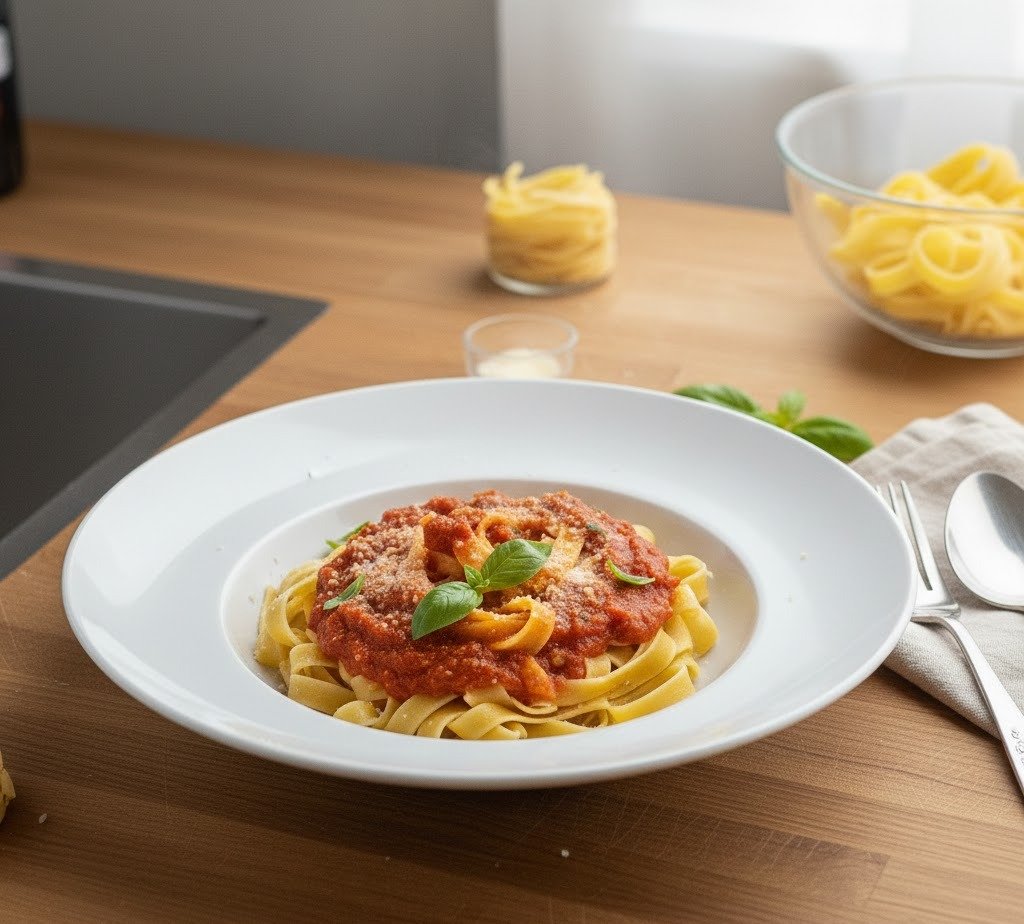
- I bring a large pot of salted water to a boil and cook the pappardelle for 2–4 minutes, until tender with a slight bite.
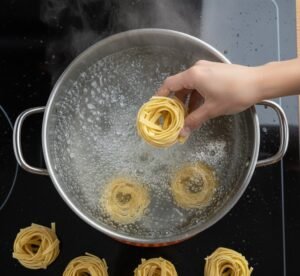
Step 10
- I drain the pasta and toss it immediately with my favorite sauce, adding a splash of pasta water if needed, and serve right away.
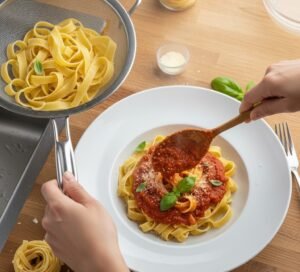
Notes
I’ve learned not to rush fresh pasta. Letting the dough rest makes rolling much easier, and uneven strands are totally normal. I usually freeze any extra pappardelle in nests and cook them straight from frozen, it works beautifully every time.